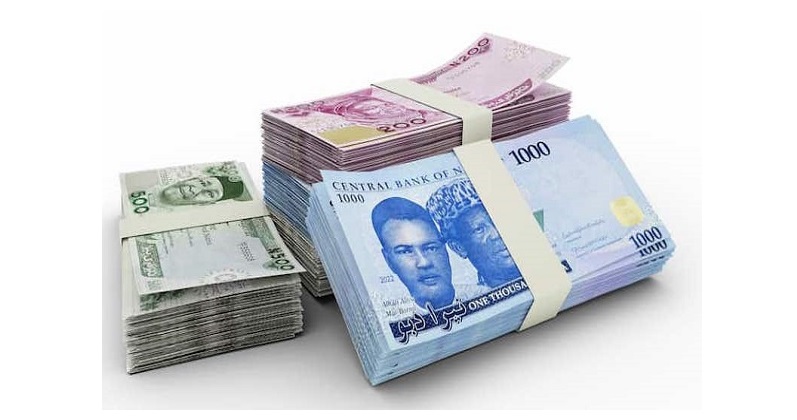





The naira made massive gain against the dollar at the parallel market, trading at N745/$ from N755/$, it closed last week.
Part of that strengthening was due to the successful election of President-elect, Senator Bola Ahmed Tinubu of the All Progressives Congress (APC).
The ongoing cash shortage caused by a plan to swap old naira notes for new ones under the Central Bank of Nigeria (CBN) currency reforms programme also contributed to the naira rebound as reduced currency in circulation impacts positively on the naira.
Forex Trader, AZA Finance, Ikenga Kalu, said the cash crunch has in turn reduced demand for foreign exchange on the unofficial market, and strengthened the local currency.
“As the redesigned notes begin to circulate in higher volume, we expect to see resurgence in forex demand and a gradual depreciation of the naira,” he said.
The naira rebound contradicts analysts’ prediction that un-waning demand for dollars and reduced capacity for interventions in the parallel and official markets will lead to further currency depreciation over the next 12 months, saying last month’s presidential election will be pivotal in determining the pace of decline.
The naira opened the year broadly unchanged at N750/$ from N748/$ in the final week of 2022.
The currency lost almost a third of its value on the parallel market last year as Nigeria’s ability to benefit from higher commodity prices was challenged by an extended shutdown of its oil production facilities and crude pipeline vandalism and theft.
With Forex reserves steadily depleting during 2022, the CBN halted dollar sales in the parallel market, further reducing supply and contributing to the naira’s weakness.
The CBN had in the last one year taken major steps to stabilise the naira. The apex bank introduced the naira-for-dollar policy, allowing foreign currency recipients to earn N5 for every dollar sent.
The CBN had promised that the new policy would provide Nigerians in the Diaspora with cheaper and more convenient ways of sending remittances to the country.
CBN Governor, Godwin Emefiele, said the policy implementation would increase the transparency of remittance inflows and reduce rent-seeking activities.
He expressed optimism that the policy extension will encourage banks and financial institutions to develop products and investment vehicles, geared towards attracting investments from Nigerians in the Diaspora.
Managing Director, Financial Derivatives Company Limited, Bismarck Rewane, attributed the naira’s continued decline to heightened forex supply shortage, demand pressure and rationing.
He said naira rates convergence would require adoption of a full floating exchange rate system determined by the forces of demand and supply.
Likewise, the International Monetary Fund (IMF) said exchange rate rigidities have constrained the economy’s ability to absorb external shocks.
The IMF insisted that restrictions on access to foreign exchange for certain categories of goods, and multiple exchange rates create distortions in both private and public sector decision making. They discourage long-term investment, encourage smuggling and provide avenues for corruption.
Moving forward, the Fund suggested that removal of foreign exchange restrictions, and a full exchange rate unification, in line with the authorities’ Economic Recovery and Growth Plan (ERGP), will help keep the parallel market premium low in a more sustained manner.
It, therefore, called for unified exchange rate for the naira to promote growth and attract foreign capital.
According to the IMF, foreign exchange backlog and shortages are intensifying Balance of Payment (BoP) pressures, insisting that exchange rate unification was imperative to reduce BoP risks.
It said that fiscal deficit will stay elevated in the medium term, while additional domestic revenue mobilisation was required to reduce fiscal risks.