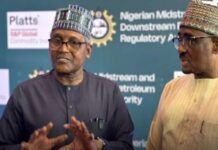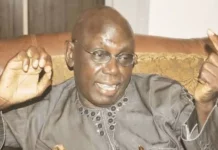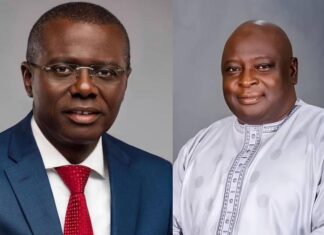


Farewell to a titan of Nigerian journalism and politics, Alhaji Sidi Ali. Your legacy endures, casting a guiding light for generations to come. Rest in peace, knowing that your contributions to our nation shall forever be remembered.
“Zamu Daura ma auren dole!” Hajiya Hakama Sidi Ali thundered over the phone after I answered her call. In Hausa, this translates to “We will find and force a wife on you!”
Hajiya Hakama Sidi Ali’s warm and forthright demeanour has been a constant source of guidance and inspiration since I received a surprise birthday gift from her in 2016. She is candid and sincere, yet always maintained a cheerful and friendly disposition. These qualities were often discussed by my father, who was her course mate at Bayero University Kano in the early ’90s.
Rather than adopting the entitled attitudes of privileged children, Hakama and her siblings, led by her senior brother Hamid Sidi-Ali, embraced simplicity, humility, and amiability — traits inherited from their father. Their family ethos also included a touch of radicalism against injustice.
Her father, Alhaji Sidi Ali, was a veteran journalist and politician who passed away on 25 April at the age of 86. As a member of the Sharifai clan, which traces its ancestry back to the renowned Islamic scholar, Al-Maghili, Sidi Ali also hailed from a distinguished media family in Northern Nigeria.
The family’s commitment to media excellence has left an indelible mark on the region’s history and culture. Notable family members include Alhaji Sidi Mohammed Ali, who worked with the Hausa Service of Voice of Ghana and later headed the Hausa Service of Voice of Nigeria (VON); Alhaji Sidi Ali Sirajo, a respected Civil War correspondent and former managing director of Triumph and New Nigerian Newspapers; and Ibrahim Sidi Ali, who contributed significantly to broadcasting at Federal Radio Corporation of Nigeria (FRCN), and also served as chief press secretary to the late Governor Sabo Bakin Zuwo of Kano.
Born in Kano on 15 July, 1938, Alhaji Sidi Ali’s journey began amidst his father’s thriving cattle and agricultural produce businesses, as a leader of the Nigerian community in Ghana. The educational odyssey of the then young boy took him from Shahuci Elementary School to Rumfa College, where he befriended future leaders, Ado Bayero and Murtala Mohammed.
Sent to Ghana for higher education, Sidi Ali’s immersion in radical politics led to his expulsion, catapulting him into a transformative phase. Under the sponsorship of Dr Kwame Nkrumah, his academic pursuits abroad ultimately culminated in his education at New York University; Merced College, California; and Shaw University in Raleigh, North Carolina. There, he obtained a bachelor’s degree in journalism, and held a diploma in Personnel Management and Industrial Relations.
In 1979, Sidi Ali joined the socialist People’s Redemption Party (PRP), led by the late Mallam Aminu Kano, and was elected to the Federal House of Representatives, representing Dambatta Federal Constituency. His re-election in 1983 saw him represent Gezawa Federal Constituency. Sidi Ali’s prowess mirrored his principled stance in both journalism and politics.
A versatile journalist and renowned Pan Africanist, Sidi Ali served as an assistant information officer at the first All African People’s Conference in Accra in 1958 and was actively involved in the pioneering work that saw to the birth of the Organisation for African Unity (OAU) in 1963.
Upon his return to Nigeria, Sidi Ali transitioned into the civil service and played a crucial role in shaping the government’s narrative during the Nigerian Civil War. He worked at the Nigerian International Press Centre, Federal Ministry of Information, among other strategic positions.
In 1979, Sidi Ali joined the socialist People’s Redemption Party (PRP), led by the late Mallam Aminu Kano, and was elected to the Federal House of Representatives, representing Dambatta Federal Constituency. His re-election in 1983 saw him represent Gezawa Federal Constituency.
Sidi Ali’s prowess mirrored his principled stance in both journalism and politics. His actions as a member of the House of Representatives, including an incident involving a gun, demonstrated his unwavering commitment to justice and accountability. His opponents often portrayed him as a controversial public figure due to his unwavering stance and outspoken nature during the Second Republic.
A contemporary of Chief MKO Abiola and Senator Olusola Saraki in politics, as a member of the Federal House of Representatives, Sidi Ali fearlessly challenged societal norms and advocated for justice and accountability.
His literary prowess is evident in 19 published books and numerous articles that he wrote, which often urged critical thought and compassionate action. Some of his notable works include A Trip to Timbuktu (1965), Corruption in High Society, and The Power of Power on Muhammad Ribadu, Former Defence Minister (1982).
Through his writings and speeches, Sidi Ali leaves a legacy of unwavering commitment to justice, accountability, and compassionate action. Some of his most controversial books include, Political fraud of the Nigerian elites, Nigeria Relations With Israel, WAI as an Ideology for moral rectitude and Tarka: A Victim of Political and Sectional Blackmail, which faced a ban by the then military administration.
His extensive travels and experiences shaped his affinity for journalism and communication, making him a true veteran of the media industry. It was not surprising that some of his children are equally Mass Communication graduates, while others are into the legal, accountancy and other professions.
The passing of Alhaji Sidi Ali resonates deeply, leaving an indelible mark not only within familial circles but also across the nation. His legacy — a tapestry woven with wisdom and compassion — serves as a beacon amid turbulent landscapes.
Like his father’s legacy, Sidi Ali dedicated his life to dispute resolution and the reconciliation of aggrieved parties. He also transformed his homes in Obalande, Lagos and Kano into havens for counselling, relief, and accommodation of stranded and downtrodden Nigerians.
His family legacy, intricately woven into Nigeria’s societal fabric, continues through his children, who embody his values and contribute significantly to various professions and fields, enriching the Sidi Ali family imprint on Nigeria’s public discourse.
The passing of Alhaji Sidi Ali resonates deeply, leaving an indelible mark not only within familial circles but also across the nation. His legacy — a tapestry woven with wisdom and compassion — serves as a beacon amid turbulent landscapes.
Alhaji Sidi Ali held board appointments, serving as a commissioner at the Nigerian Broadcast Commission (NBC), a member of the board of NDLEA and that of Presidential Panel on Fuel Scarcity. He also served as a member the 2014 National Conference (Confab), among many other bodies.
Beyond accolades, Sidi Ali’s legacy transcended professional realms. Throughout his life, he remained a steadfast servant to Nigeria, honoured for his integrity, commitment, dedication, and sacrifice.
Farewell to a titan of Nigerian journalism and politics, Alhaji Sidi Ali. Your legacy endures, casting a guiding light for generations to come. Rest in peace, knowing that your contributions to our nation shall forever be remembered.
Gidado Yushau Shuaib, the publisher of YouthDigest and News Digest, is the Convener of annual Campus Journalism Awards (CJA) writes from Abuja.