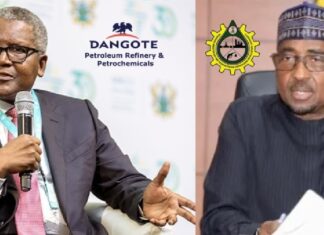


This is just as Chairman of NCP, Vice President Kashim Shettima, has demanded a fundamental shift in Nigeria’s privatization agenda, urging a move from simply selling state-owned enterprises to asset optimisation designed to power the nation’s $1trillion economy ambition.
The DG said while the asset has been fully handed to the core investor, Transcorp Power Consortium, the government also restructured its transaction this year.
After the sale of the Afam Power Plant to the Transcorp Consortium, which was finalised in November 2020, the Federal Government needed to execute the Performance Agreements, a standard part of the post-acquisition process in Nigeria’s power sector privatisation, outlining the investor’s commitment to specific performance targets, such as increasing the plant’s operational capacity within a given timeframe.
Gbeleyi noted that with the execution of the PAs to regularise the transactions, the BPE can now commence the mandatory post-privatisation monitoring of the core investor’s performance obligations.
The DG said Council also deliberated extensively on its performance and that of the BPE in the year 2025, in terms of what was accomplished, including the unbundling of the Transmission Company of Nigeria (TCN).
“As you heard at the meeting, the unbundling of the Transmission Company of Nigeria into two entities, Nigerian Independent System Operator, as well as the Transmission Service Provider, was achieved in the course of this year,” he explained.
“Before the approval, Chairman of the NCP, Vice President Shettima, who demanded a fundamental shift in Nigeria’s privatisation agenda, said there is a need to shift from simply selling state-owned enterprises to asset optimisation designed to power the nation’s trillion-dollar economy ambition.
The Vice President said this new direction is a critical necessity, calling for discipline and vision to guide the country away from the pitfalls of inefficiency.
He maintained that the NCP must serve as the economic compass guiding the nation’s investments and policy choices, stressing that without urgent action, economic projections would remain theoretical.
“Our aspiration to build a trillion-dollar economy is a destination that demands discipline, vision, and absolute adherence to the compass produced by this Council. Without such a compass, our economic projections would amount to nothing more than an exercise in theory formation,” VP Shettima said.
The Vice President proposed a future where the NCP would focus on unlocking the value of Nigeria’s latent assets, which he described as an immense reservoir of national wealth. This includes underutilised land, dormant real estate, and untapped intellectual property.
“The necessity of this Council has never been in doubt. We replace bureaucratic bottlenecks with commercial agility, relieve government of the costly burden of subsidising inefficient state-owned enterprises, and attract vital investment,” he said.
To achieve this optimisation, VP Shettima directed the Council to immediately explore modern models like long-term concessions, asset-backed securitisation, and core investor sales tied to strict performance benchmarks.
He also issued a stern warning on transaction integrity, demanding zero tolerance for ambiguities to avoid costly litigation and to send a “powerful signal of stability and seriousness to the international investment community.”
For his part, the Minister of Finance and Coordinating Minister of the Economy, Mr. Wale Edun, commended the BPE team, highlighting the need for its sustained commitment to quality and best practices.
Others who made contributions at the council meeting included Minister of Power, Chief Adebayo Adelabu; Minister of Budget and Economic Planning, Atiku Bagudu, Attorney General of Federation and Minister of Justice, Lateef Fagbemi SAN, and Governor of Central Bank of Nigeria (CBN), Olayemi Cardoso.