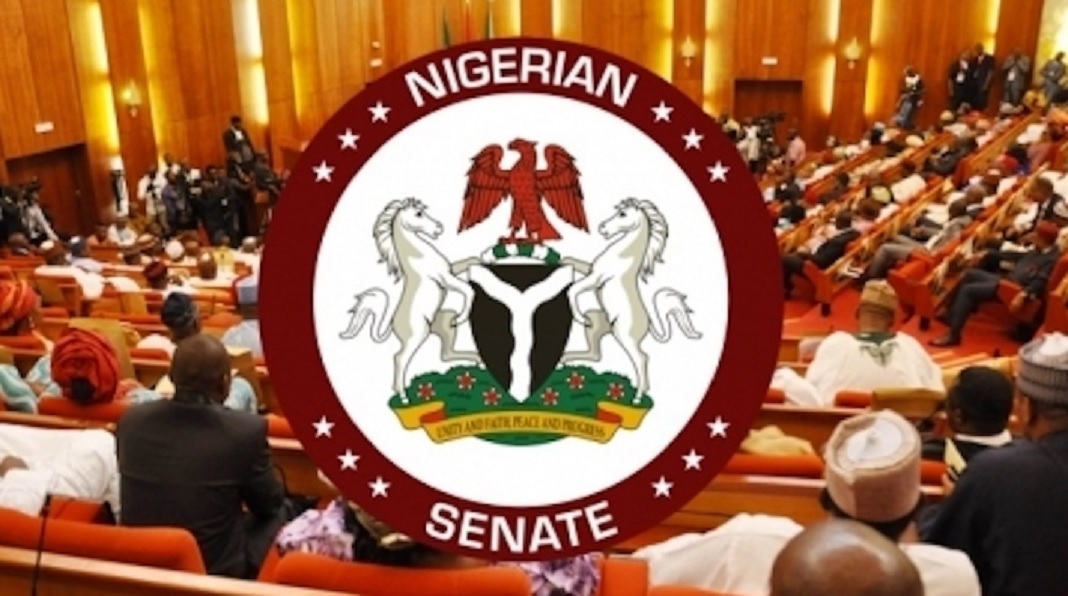





The Senate, on Tuesday, passed for second reading a bill aimed at overhauling the management of assets recovered from criminal activities across the country.
The proposed legislation seeks to establish a centralized agency dedicated solely to the administration and disposal of proceeds of crime, addressing longstanding challenges of inefficiency and lack of transparency.
Sponsored by Senator Idiat Oluranti Adebule (APC, Lagos West), the Proceeds of Crime (Recovery and Management) Bill, 2025 (SB. 343), seeks to amend the existing 2022 Act by removing asset management responsibilities from the current 18 agencies involved in prosecution and property management.
Speaking during the debate, Senator Adebule highlighted that the current framework—where agencies such as the Economic and Financial Crimes Commission (EFCC), Independent Corrupt Practices and Other Related Offences Commission (ICPC), and Nigeria Customs Service (NCS) all manage recovered assets independently—has resulted in overlapping functions, poor coordination, and weakened oversight.
Adebule further said, “The existing system has deprived Nigeria of the full benefits of recovered assets due to fragmented operations without standardized engagement.”
She also detailed that under the 2022 Act, each of the 18 agencies created its own Proceeds of Crime Directorate, causing duplication of roles and inadequate safeguards for seized properties.
The new bill proposes to establish a single, independent agency responsible for the management, administration, and disposal of all recovered assets; introduce uniform policies and guidelines for handling forfeited properties; develop an automated management system with a centralized database to track all seized and forfeited assets; and allow investigative and prosecutorial agencies to focus exclusively on tracing and recovering assets, leaving management to the new agency.
Senator Adebule further noted that similar models are successfully implemented in countries such as the United Kingdom, United States, Australia, and South Africa, where prosecution and asset management functions are clearly separated to improve efficiency and transparency.
“This reform will reduce abuse and opacity in asset management, a major public concern, and ensure forfeited assets are accounted for transparently and used for national development,” she added.
While the bill received overwhelming support, dissenting voices were raised by Senators Sani Musa and Emmanuel Udende. Musa expressed reservations, advocating instead for strengthening existing agencies rather than creating new ones. Udende warned against the proliferation of government bodies, arguing that agencies like the EFCC already have powers to manage recovered assets.
In response, Senator Isah Jibrin emphasized the need to plug “leakages” within the current system by establishing an independent body. “There are leakages by agencies that recover these assets, and we need to block them through an independent agency,” he added.
The bill, first read on February 14, 2024, now moves to the Senate Committee on Judiciary, Human Rights, and Legal Matters for further legislative scrutiny, with a four-week timeline for completion.
If passed into law, the amendment is expected to strengthen Nigeria’s anti-corruption framework and enhance the credibility of asset recovery efforts, a critical area in the fight against economic and financial crimes.