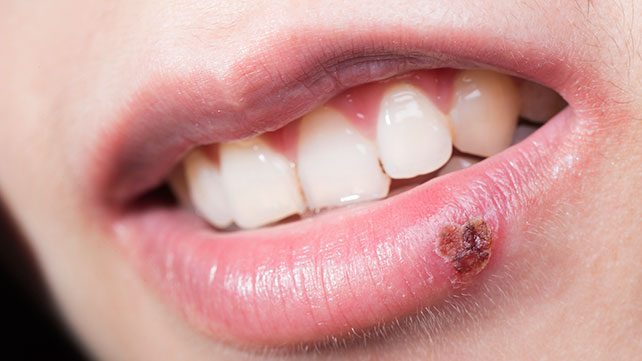





A medical practitioner, Dr. Chinonso Egemba, has disclosed that blister, which usually appeared on lips, is not caused by malaria but by herpes.
Herpes is a virus causing contagious sores, most often found around the mouth or on the genitals. There are two types of the Herpes Simplex Virus.
According to Medical News Today, the HSV-1 causes oral herpes, which usually affects the mouth and surrounding skin while HSV-2 causes genital herpes, which is usually sexually transmitted.
Dr. Egemba, popularly known as ‘Aproko Doctor’, noted that the herps can be passed from one person to the other through kissing, or oral sex.
He added that antibiotics cannot cure the sores on the mouth.
In a post on his Instagram post @aproko_doctor, he said, “Here is the thing: There is a cold sore caused by a variant of the herpes virus usually Type 1. You can get it through close contact, e.g kissing.
“It lives in the nerves under the skin and the moment you become ill, or your immunity drops, you see them.
“The second variant is type 2, which usually affects the genitals. It is also possible for type 2 to cause sores on the mouth.
“If you have a cold sore, you’ll most likely experience fever and joint aches, this is what many people mistake for malaria, sometimes typhoid.
“Avoid kissing anyone who has a cold sore or sharing drink or spoons or even cosmetics like make up.
“Don’t perform oral sex on anyone who has genital herpes,” he said.
He also warned against kissing babies whether one has herpes or not.
Egemba said, “It is not a life-threatening infection, but you have to be careful, many people got theirs as kids, from probably other kids or adults that kiss babies.
“The likelihood of infection is high especially when the sores are visible.
“Don’t give oral sex if you have cold sores or give oral sex to someone with sores on the genitals. Do not share makeup items like brushes.
“Please don’t kiss babies whether you have this or not. Always practice safe sex, protect yourself and others.
“And do not waste your time going to buy antibiotics when you see the herps, it is a viral infection and antibiotics will not work on them.”
The Medical News Today also noted that no drug can get rid of the herpes virus, saying that a doctor may prescribe an antiviral medication to prevent the virus from multiplying.
It noted that over-the-counter herpes treatments, which are often creams, can help manage tingling, itching, and pain.
“To significantly lessen the duration of an outbreak, start treatment within 24 hours of initial symptoms, for example, as soon as the tingling begins.
“If a person uses antiviral medication, symptoms may resolve 1–2 days more quickly than if they had used no treatment. Medication may also reduce the severity of symptoms.
“If a person has fewer than six recurrences of genital herpes per year, a doctor may prescribe an antiviral medication at each recurrence,” it said.
The online portal added that if a person experiences recurrences more frequently, a doctor may recommend taking an antiviral for 6–12 months at a time.
“Taking these medications every day for longer periods can significantly reduce the risk of passing herpes to a partner, though it remains a possibility,” it said.