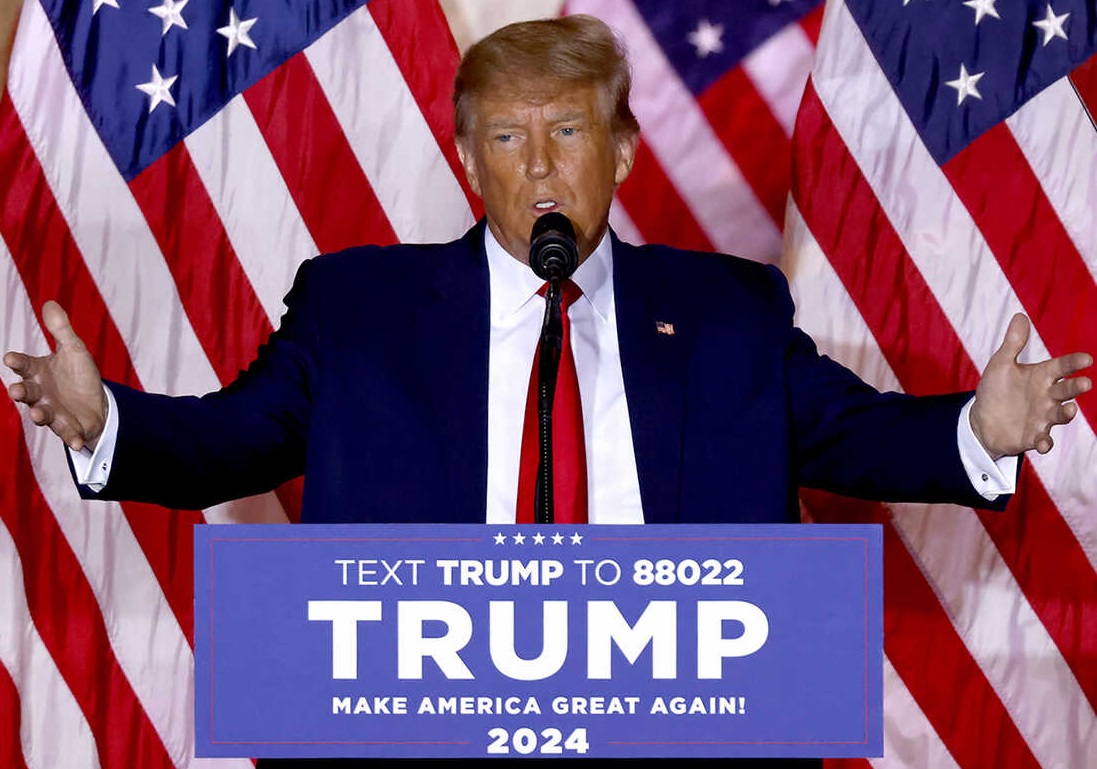





Former president Donald Trump has been indicted in special counsel Jack Smith’s investigation into efforts to overturn the 2020 election results and the events leading up to the Jan. 6, 2021, attack on the U.S. Capitol.
An indictment returned Tuesday by a grand jury in U.S. District Court in Washington, D.C., alleges that Trump perpetrated three criminal conspiracies “built on the widespread mistrust the Defendant was creating through pervasive and destabilizing lies about election fraud.”
The charges are separate from the federal indictment he faces in Florida for allegedly conspiring to unlawfully hide and retain classified documents taken to his Mar-a-Lago home after he left the White House.
The legal process in both cases will be similar in many ways and could be resolved in months or drawn out for years before a plea is reached or it goes to a jury for a verdict. Charges could also be dismissed if Trump, the front-runner for the 2024 GOP presidential nomination, is reelected.
Here’s what you need to know about the legal process.

What is an indictment?
An indictment is a written statement of criminal charges against a person approved by a grand jury, a group of 23 people who consider whether there is probable cause that a person committed a crime. A simple majority of the grand jurors must vote in favor of an indictment for charges to go ahead, compared to a trial where unanimity is required for a conviction.
What is the case about?
The special counsel’s office has been investigating whether Trump, or those close to him violated the law by interfering with the lawful transfer of power after the 2020 presidential election or with Congress’s confirmation of the results on Jan. 6, 2021.
Trump was under investigation for multiple potential violations, including obstruction of an official proceeding of Congress; conspiracy; and depriving Americans of their rights to have a free and fair election in violation of the U.S. Constitution and federal law.
Investigators have probed whether Trump’s campaign committed fraud by raising money off claims of election fraud that they knew were false; if he or legal advisers set up fraudulent slates of illegitimate electors submitted to Congress from swing states that Trump lost, knowing the challenges were groundless; and whether he pressured then-Vice President Mike Pence to unlawfully block or delay Congress from confirming the electoral count so the outcome could be thrown to the House of Representatives.
What are the charges?
Trump has been charged with four counts related to his actions after his loss of the 2020 presidential election: conspiracy to defraud the United States; conspiracy to obstruct an official proceeding; obstruction of and attempting to obstruct an official proceeding; and conspiracy against rights.
“Despite having lost, the Defendant was determined to remain in power,” the indictment reads. “So for more than two months following election day on November 3, 2020, the Defendant spread lies that there had been outcome-determinative fraud in the election and that he had actually won. These claims were false and the Defendant knew they were false.”
The indictment alleges that Trump enlisted co-conspirators to help in “his criminal efforts to overturn the legitimate results of the 2020 president election and retain power.” The indictment doesn’t name the co-conspirators and they do not appear to be charged.
Will Trump be arrested?
No. As with his initial appearance in federal court in Miami in June, Trump is expected to be summoned to self-report to the U.S. District Court in Washington, D.C. Trump is already under constant Secret Service protection.
What will happen next in court?
Trump has been summoned to appear at 4 p.m. Thursday before the same judge who accepted his indictment, U.S. Magistrate Judge Moxila A. Upadhyaya, in Washington, D.C. Trump may be asked to enter a plea at a formal arraignment. The judge will set release conditions after hearing from prosecutors and the defense.
The government previously asked, and a federal judge in Miami agreed, in Trump’s classified documents case to release him without bail after he promised to show up at future proceedings and to not violate any laws.
Prosecutors dropped typical requests for defendants to turn in their passports and abide by possible travel restrictions and pretrial supervision notification requirements.
In the coming days and weeks, the parties will probably discuss how soon the government will turn over evidence in the case to Trump’s defense — a process known as discovery — how long to pause the federal 70-day speedy trial requirement while both sides prepare any pretrial motions, and when to set a trial date.
Will he be held in jail?
No, and federal prosecutors did not request it in the classified documents case. Factors a judge weighs in considering whether to detain someone before trial include a defendant’s flight risk, danger to the community and violent criminal record, none of which are factors here.
Will he be fingerprinted?
Federal criminal defendants must be processed before or after presentment to a court by the U.S. Marshals Service, FBI or other Justice Department law enforcement agency. That processing includes the collection of fingerprints. Federal defendants who are arrested can also be compelled to provide a DNA sample.
Can Trump still run for president?
Yes. While it has never been attempted by a candidate from a major party before, Trump is allowed to run for president while under indictment — or even if he is convicted of a crime.
Could a trial happen before the 2024 election?
That is a question that will depend largely on the federal judge assigned the case in D.C.
In his Florida case, Trump’s defense requested a trial delay until after the election, and prosecutors pushed for proceedings in that case to start as soon as this December. But U.S. District Judge Aileen M. Cannon in Florida seemed wary of both requests at a hearing in July.
Trump and his lawyers already face a late March trial date in a New York state fraud case and could face further criminal charges in investigations brought by state prosecutors in Georgia and the special counsel’s office into whether Trump’s efforts to overturn the 2020 election result violated the law.