
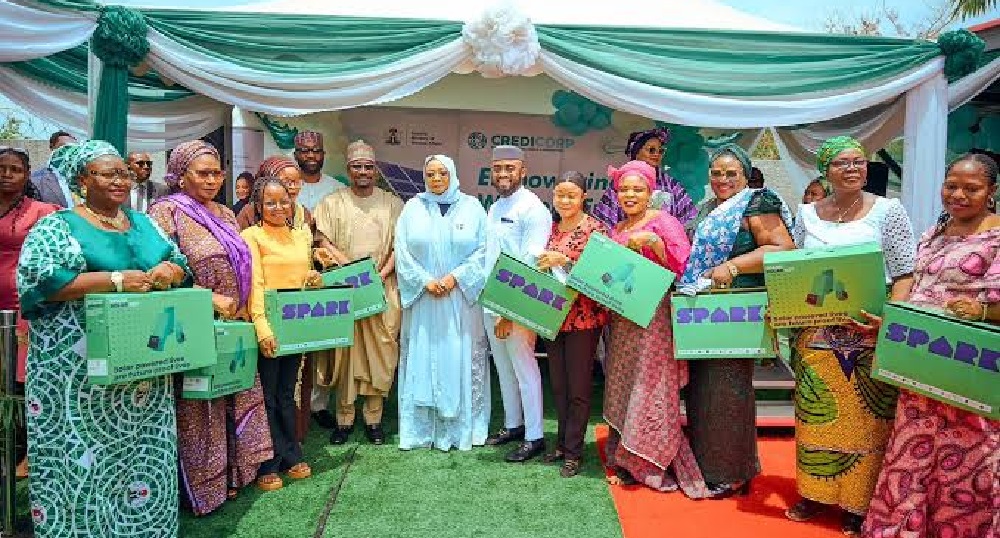





The Nigerian Consumer Credit Corporation (Credicorp) has earmarked N5 billion for women to access alternative energy using solar for their homes, businesses and communities.
Managing Director, Nigerian Consumer Credit Corporation (Credicorp), Uzoma Nwagba disclosed this during the empowering women, ending poverty programme with the theme, “Ensuring access to sustainable energy, solution through strategic partnership” in Abuja.
He said: “This fund is already here we intend to grow these fund wherever we see the opportunity. From the N10billion we are setting aside N5billion for women to enable them get access to alternative energy, this will give them access to solar.
“We take the empowerment of women very seriously. We do it because empowering women is good business knowing that women are good in paying back loans and when you empower a woman you empower the community you empower the nation”.
He added that women are less prone to vices and reckless use of funds.
It is not just a good thing, it is good that we grow our allocation of funding to women knowing that at the end the money will have good multiplying effect on several thousands of people.
Nwagba added that President Bola Tinubu is the reason for this programme.
Said he: “He has been particularly concerned about access to credit for Nigerians to improve the quality of their lives”.
The target of credicorp is mobility and energy especially for women. Our focus today is on renewable energy.
Minister of Women Affairs, Imaan Suleiman-Ibrahim noted that this initiative is a defining moment for national development.
It is not just another policy conversation, but a purpose-driven revolution.
She said: “Every year, over 80,000 women die from toxic smoke due to traditional cooking methods. These are not numbers these are mothers, providers, and builders of this nation. This must end on our watch”.
Imaan noted that the clean energy revolution will be designed by women, for women, and led by women, using a data-driven and community-based approach to deliver solutions directly to rural and underserved areas. This approach will ensure that solutions are tailored to the specific needs of women in these areas.


















 has earmarked N5 billion for women to access alternative energy using solar for)