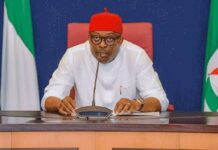





Ekiti State Governor Kayode Fayemi has approved the proposed livestock production farming by a group of Ekiti indigenes in the Diaspora under the aegis of Ekiti Diaspora Forum (EDF) just as the governor has approved a 250-hectares of land (for a start) in Irele Ekiti for the purpose.
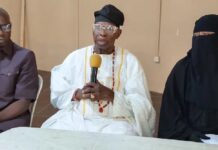
A statement by the former Senior Special Assistant (Diaspora Affairs) to Ekiti State Governor, Femi Odere, also disclosed that the final approval for the livestock farming, whose first phase will be a cattle ranch, is another testament that Gov Fayemi is not only a “promise keeper,” but a state chief executive whose “passion for the economic development of the state is sine qua non” as well as his “desire to bring in the state’s diasporic indigenes into the development matrix.”
Having already established and registered a Special Purpose Vehicle (SPV) for the project in the state which is known as EkitiKete Livestock Development Company Limited by the group, the initial funding over the three years for the first phase of the project is expected to be N1 billion.
The statement reads in part, “With this final approval by the governor, the coast is now clear for the company to sign an MOU with Vietnam-Africa Economic Cooperation Alliance (VAECA) which is going to be the company’s technical partner after which work on the project will begin in earnest.
“The conclusion of the deal that would enable the state’s Diaspora to now participate majorly in the economic development of the state” is the “highest point” of his public service career.”
According to Odere, he’s lucky to have had a boss who understands his thinking and his overarching objective to add value to his government.
He also mentioned Prof Bolaji Aluko for his “supportive role” and the Commissioner for Agriculture and Food Security, Dr. Olabode Adetoyi for also believing in the project as what he described as “their lack of enthusiasm would have made it difficult, if not impossible, for this project to come to fruition.”
Odere likened EDF, which was his brainchild almost immediately after his appointment in order to galvanize the state’s diasporic indigenes for the development of their state as “an acorn that would very soon produce an oak tree” with the governor’s final approval that “would without a doubt, play a significant role in the state’s economy into the foreseeable future.”