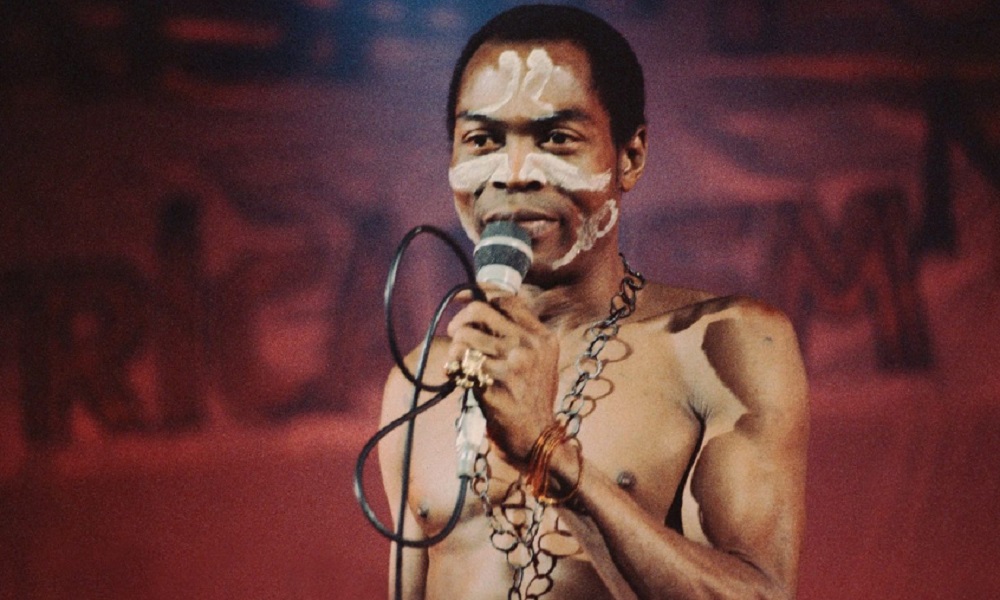





Nearly three decades after his death, Afrobeat legend Fela Anikulapo-Kuti has been inducted into the 2025 Grammy Hall of Fame for his classic 1976 album, Zombie.
He is the first Nigerian artiste to receive the honour.
The Recording Academy, organisers of the Grammy Awards, announced the inclusion in this year’s Hall of Fame selections.
The Hall of Fame differs from other Grammy categories by recognising recordings of “lasting qualitative or historical significance” that have endured.
The ‘Zombie’ album merited the honour for the late Afrobeat icon and his family as part of the nominated works released for the past 25 years, not recent musical works.
The Grammy organisers, the Recording Academy of the United States, which recognises outstanding achievements in music, awarded the socio-political themed album for meeting criteria for recordings with lasting qualitative and historical significance.
Zombie
Fela’s Zombie album, a biting socio-political critique of the Nigerian military regime, was released in Nigeria under Coconut Records in 1976 and in the UK by Creole Records in 1977.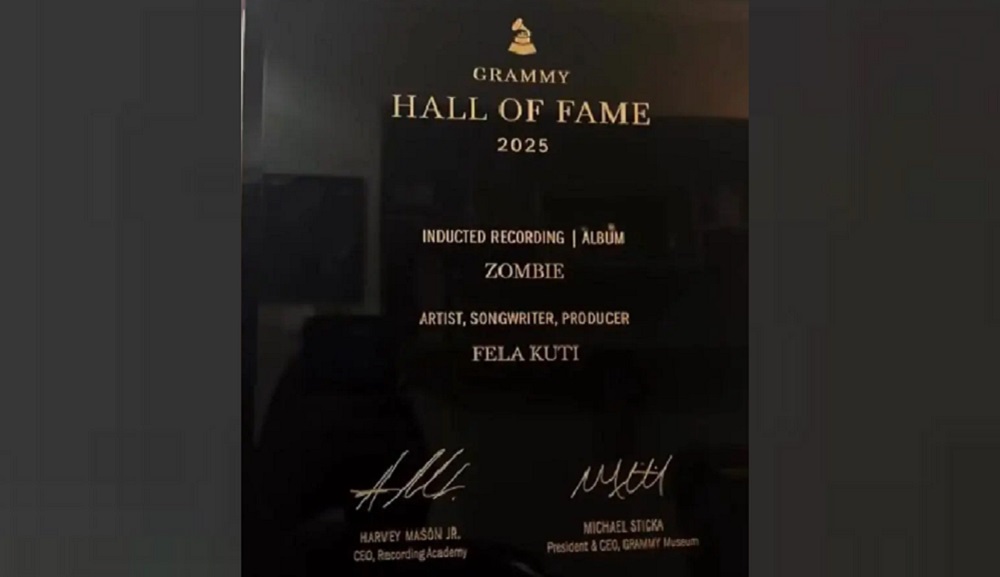
Tracks like Zombie, Mister Follow Follow, Observation is No Crime, and Mistake (recorded live at the Berlin Jazz Festival in 1978) cemented the album’s legacy as a fearless protest record.
The classic album Fela’s ‘Zombie’ is now in the league of other notable musical works that earned the Grammy Hall of Fame induction. Other albums from Jay-Z, Michael Jackson, Santana, and Cat Stevens have since been included in the Grammy Hall of Fame.
Fela’s eldest son, Femi, announced the award’s receipt in an X post on Wednesday. He thanked the Grammy organisers on behalf of his late father.
He wrote: “Our father’s legacy lives on. We are honoured to accept this Grammy Hall of Fame award on behalf of Fela Anikulapo Kuti.”
Femi, a singer, further noted the impact of his father’s music legacy worldwide. “His music continues to inspire & unite people across the world 🌎#Grammy,” Femi added.
The album was a major commercial success and resonated deeply with the Nigerian population, leading to widespread anger and resentment within the government.
In response to the album’s popularity, the government retaliated with a violent attack on Fela’s commune, the Kalakuta Republic, which destroyed his property, inflicted severe injuries on Fela, and led to the tragic death of his mother, Funmilayo Ransome-Kuti.