





The Federal Inland Revenue Service (FIRS) has recovered and secured over N4 trillion in tax liabilities from the Nigeria National Petroleum Company (NNPCL).
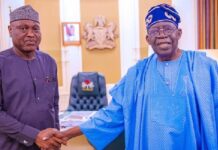
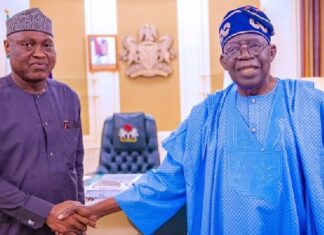
The immediate past Executive Chairman of the FIRS Muhammad Nami made this disclosure while handing over to Zacch Adedeji, the new Executive Chairman of the FIRS on Monday, September 18, in Abuja.
Nami said the Service has, “assessed, reconciled and recovered over N4 trillion outstanding tax liabilities and sequestered funds from NNPC on behalf of the Federation.”
According to him, by this action, the FIRS generated over N12 trillion for the federal government between January and 14 September 2023, made up of the N4 trillion recovered from NNPCL and another N8.5 trillion (cash) collected as tax revenue during the period.
Nami stated: “The amount is exclusive of amounts invested by our taxpayers under the Road Infrastructure Tax Credit Scheme and tax implications of waivers by the government from January 2023 to date. In other words, the federal government is set to realize well over N15 trillion in tax revenue by year’s end in 2023.”
According to Nami while performing his last duty as Executive Chairman of the FIRS, “our projected total 2023 tax collection is a minimum of N15 trillion and a projected tax to GDP of nearly 14% by December 2023.
Certainly, the projections by the current government of tax to GDP of 18% in another four years is not only realizable but can be surpassed.”
In his address, Zacch Adedeji said the goal of the FIRS under him would be to create a tax system that is both innovative and trustworthy.
The focus, he noted, is on incorporating quality data into the operations of the tax system to improve its efficiency and effectiveness, saying that by utilizing data, the tax system aims to track its progress, set benchmarks, make informed decisions, and ultimately enhance its performance.
He said the use of data would provide accurate insights that would lead to better outcomes in terms of the output of the tax system.
Adedeji said he would improve the nation’s tax system by making it more reliable and trustworthy for all stakeholders involved.
He noted: “We will build a tax system that is smart and modern, one with unquestionable integrity and will earn the trust as well as the admiration of stakeholders.
“Under me, we will not force things down the throats of our stakeholders. I will always be ready to engage with them, work with and through them to jointly build a tax administration that we will all be proud of and one that enjoys the trust and confidence of all.
“We have a duty to make it clear and certain to the taxpayers why they should perform their tax obligation without waiting for the enforcement team to knock on their doors. On our part, we must ensure we simplify the tax system to make it easy for people to pay.
“In all of our operations, quality data will be a key component. We shall increase the use of data to allow us to measure progress, establish benchmarks, make informed decisions, and enhance performance excellence.
“Data and of course evidence from its use will give us accurate insights that will make our output better. Reliable data will also aid accountability.”









 has recovered and secured over N4 trillion in tax liabilities from the Nigeria National Petroleum)