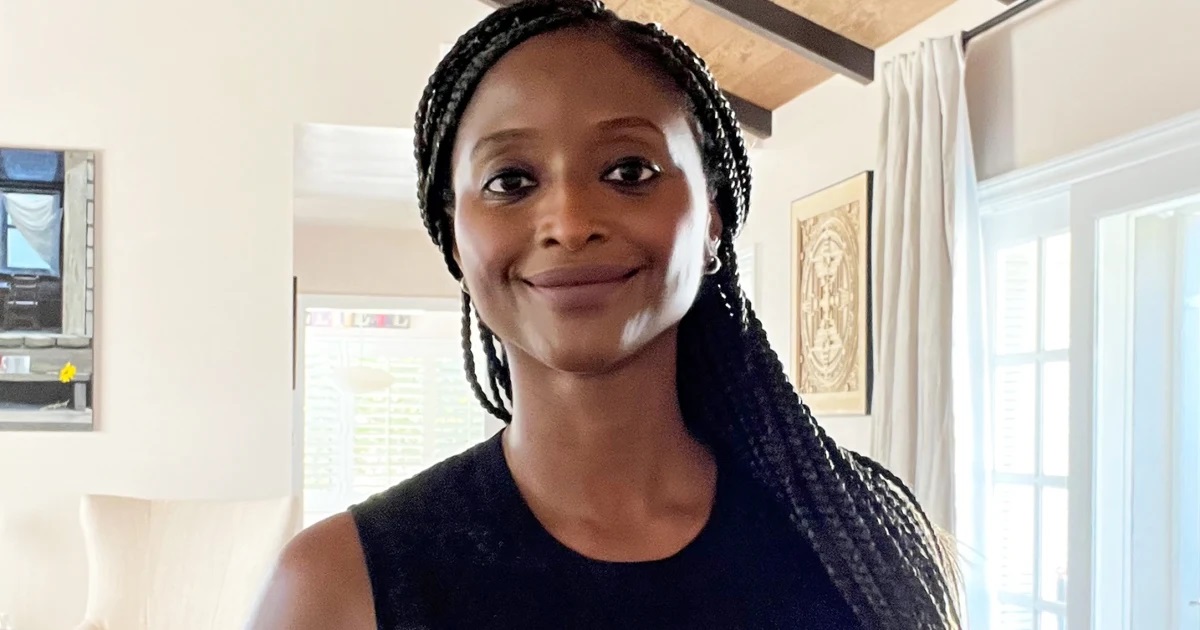





Former CNN news anchor Isha Sesay stated on Thursday that she is pregnant and divorced.
It was the first time the renowned British Sierra Leonean broadcaster would go public with details of her private life.
In a lengthy pregnancy journal published on NBC’s Today show, Ms Sesay revealed she was divorced and conceived at 46.
She also shared snippets on her Instagram page.
The anchor married Leif Coorlim, an award-winning journalist and executive editor of the CNN Freedom Project, in 2013.
They met in 2008 after working on a CNN series together in Atlanta; they were friends till 2011, when they began dating.
It is, however, unclear when they divorced as it was never made public.
Beginning her story, the British journalist of Sierra Leonean descent said she would never have thought of being divorced or having a child as a single parent.
She said, “If you’d told the 16-year-old me that at 46, I’d be divorced, single and having a baby on my own — by choice! — I’d have shuddered and firmly said, “no!”
” Back then, I had very definite ideas about the future course my personal life would take, and it didn’t look like this. I imagined something way more straightforward and, dare I say it, conventional”.
Career and Marriage
The London-born Journalist reminisced on her career trajectory, saying she was blessed to have spent decades as a journalist- 13 years on air for CNN International, travelling the world to cover global events and interviewing presidents, movie stars and world leaders.
Isha, whose first job was as a TV announcer on BBC Choice in 1999, said despite her accomplishments, she never quite attained her deepest desires.
“I published a book, became a UN Goodwill Ambassador and started a nonprofit to help empower African girls, but in my quiet moments, the one thing I wanted the most, to become a mother, and it remained out of reach.”
The broadcaster who covered Nigeria’s
The presidential election in April 2007, where she exclusively interviewed the then-outgoing president Olusegun Obasanjo and the newly elected president Umaru Yar’Adua, said her marriage was short-lived.
She said, “A brief marriage to a kind man didn’t result in children, and then the year I turned 40, my mum had a catastrophic stroke, leaving me no emotional space to contemplate anything other than caring for her.
Six years went by, and a few months ago, I found myself in a bad relationship with a man who took about 12 hours to reply to all my texts, among other red flags.”
She said her divorce led her to a self-discovery journey.
“It was then, in the aftermath of our inevitable breakup, that it hit me. Not having a child would be the greatest regret of my life.”
“And with my biological clock ticking down, if I was waiting for the right man to come along before I did it, well, I might just find myself out of time,” she said.
Having a Baby
Narrating her story, she highlighted the mental battles she fought.
She said it included how she would handle society’s questions about her planned single parenthood, the endless meetings with various doctors, numerous blood tests, pelvic exams, bruising injections, nausea-inducing medication and unexpected fibroid surgery.
“But perhaps most challenging of all has been the emotional dimension of this journey, especially surrounding my choice of a sperm donor.
“The decision asked me to confront questions surrounding the importance of the race, ethnicity, religion and educational background of my child’s father. Essentially, it forced me to re-examine my upbringing, values and worldview,” she recalled.
Frustrations
The 46-year-old said her first in Vitro Fertilisation attempt was unsuccessful, and she cried for days afterwards before finding the strength to start the process again a few months later.
She also narrated how her body fought against it and how she lost hope and became impatient at her third trial.
“But with each passing day, I grew more fearful and anxious about my chances of being able to carry a child successfully. Those feelings only intensified when my doctor decided to halt my second attempt mid-cycle because my body was responding negatively to the medication.”
“With two failed attempts to my name, I approached my third embryo transfer with relatively low expectations. In the two weeks that followed the procedure, my mind raced uncontrollably, and I battled the urge to take an early pregnancy test.”
Ms Sesay said she derives joy from being able to describe herself as pregnant.