




The only hopeful thing in this sorry story is that it has taken this judicial mano-o-mano in Kano to rouse a set of actors who have for long chosen to be part of the problem in offices that require them to be part of the solution. The Nigerian Bar Association claims to promote the rule of law. It is, therefore, disappointing when its president creates false equivalence between the Federal High Court and a State High Court on a question of chieftaincy. There is none.
Muhammad Ali, the American boxing phenomenon whom the British Broadcasting Corporation (BBC) voted the Sports Personality of the 20th Century in 1999, often promoted the pugilistic enterprise in verse. When then ruler of the country formerly known as Zaire (now the Democratic Republic of the Congo), Mobutu Sese Seko Kuku Ngbendu wa za Banga, invited him to a contest against then reigning champion, George Foreman, for the undisputed heavyweight boxing championship of the world in October 1974, Ali christened the contest as “Rumble in the Jungle.”
One year later, in October 1975, Filipino dictator, Ferdinand Marcos, thought to imitate his friend in Zaire by inviting Ali to fight his long-time rival, Joe Frazier, for a third time for bragging rights to the title of greatest of all time (GOAT). Never short of a keen tongue for every occasion, Ali promised that it was going to be “a killa and a thrilla and a chilla, when I get that gorilla in Manila.” The fight went into the history books as “Thrilla in Manila.”
Over a five-day period in the last week, three different judges in two court systems in Nigeria – one state and one federal – have gone mano-o-mano in Kano in judicial pugilism, deploying a fusillade of mutually contradictory ex-parte and interim orders, all and each purporting to comfort one side or the other in the contest over the destination and future of the Kano Emirate.
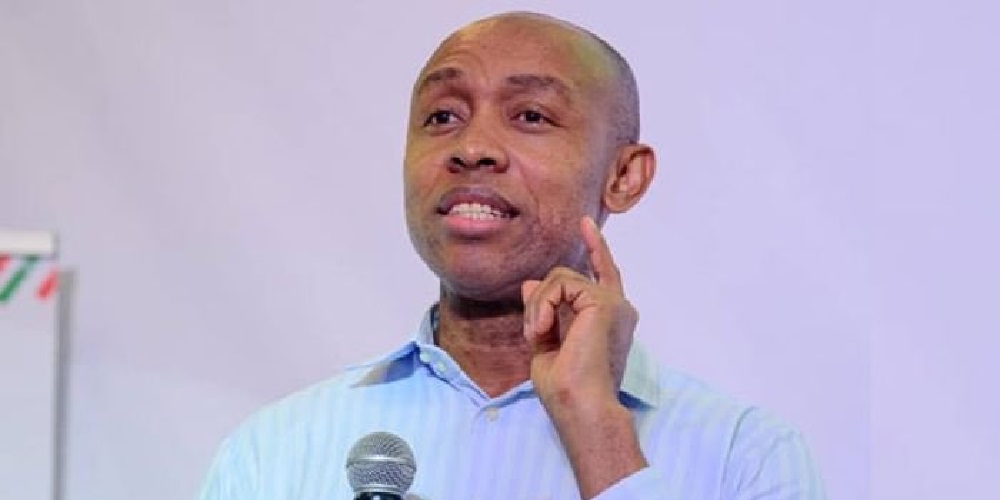
Like the legendary manager of Arsenal FC, Arsene Wenger, who always seemed not to see awful things that he was reluctant to pronounce upon, Yakubu Maikyau, the physically imposing but somnolent president of the Nigerian Bar Association (NBA), on this occasion got unusually exercised by the judicial blood-sport in Kano.
In an uncharacteristically forthright statement, Mr Maikyau, a Senior Advocate of Nigeria (SAN), denounced “the conducts (sic) of counsel and the courts in handling the proceedings, which culminated in the orders issued by the Federal High Court, the Kano State High Court, and again the Federal High Court,” describing them as “a circus,” which “have brought utter disgrace and shame to the profession.”
A statement from this president of the NBA on this kind of affair is so unusual that it is a spectacle on its own, there to be admired for the fact of its existence and not to be made the subject of any quibble. There are several things that this president of the NBA was reluctant to utter but whose acknowledgement is essential if the affliction that he has chosen on this occasion to recognise is to be lanced for good.
36 years ago, following his 1986 deposition as the Emir of Muri by then Governor of Gongola State, Yohanna Madaki, a soldier, Alhaji Umar Abba Tukur sued to enforce his fundamental rights before the Federal High Court in Kano. The Supreme Court made it clear that the Federal High Court is a court of limited jurisdiction and warned that: “Courts in this country, without exception, have no power to prescribe jurisdiction for themselves. Neither do they have power to expand or reduce their area of jurisdiction.”
First, it must count as one of those judicial miracles that have become the staple of the Nigerian judiciary, that two different judges of the Federal High Court managed to both defy the Constitution and overrule the Supreme Court over a local chieftaincy question. Section 251 of Nigeria’s 1999 Constitution makes it clear that the Federal High Court is a court of limited jurisdiction confined to issues over which the Federal Government has competence to make laws or to necessarily ancillary matters. A chieftaincy dispute, which is what the tussle over the Emirship of Kano is, is palpably beyond the scope of the Federal High Court under the constitution and under the well-established jurisprudence of the Supreme Court.
36 years ago, following his 1986 deposition as the Emir of Muri by then Governor of Gongola State, Yohanna Madaki, a soldier, Alhaji Umar Abba Tukur sued to enforce his fundamental rights before the Federal High Court in Kano. The Supreme Court made it clear that the Federal High Court is a court of limited jurisdiction and warned that: “Courts in this country, without exception, have no power to prescribe jurisdiction for themselves.
Neither do they have power to expand or reduce their area of jurisdiction.” Even more telling was this line from the judgment of Otutu Obaseki, speaking in that case for a unanimous Supreme Court: “all the breaches of the fundamental rights alleged flow from the deposition of the appellant from the office of Emir of Muri by the Military Governor of the State. The office of Emir of Muri is a chieftaincy office and the deposition of the Emir a chieftaincy question which only a State High Court has jurisdiction to determine.”