
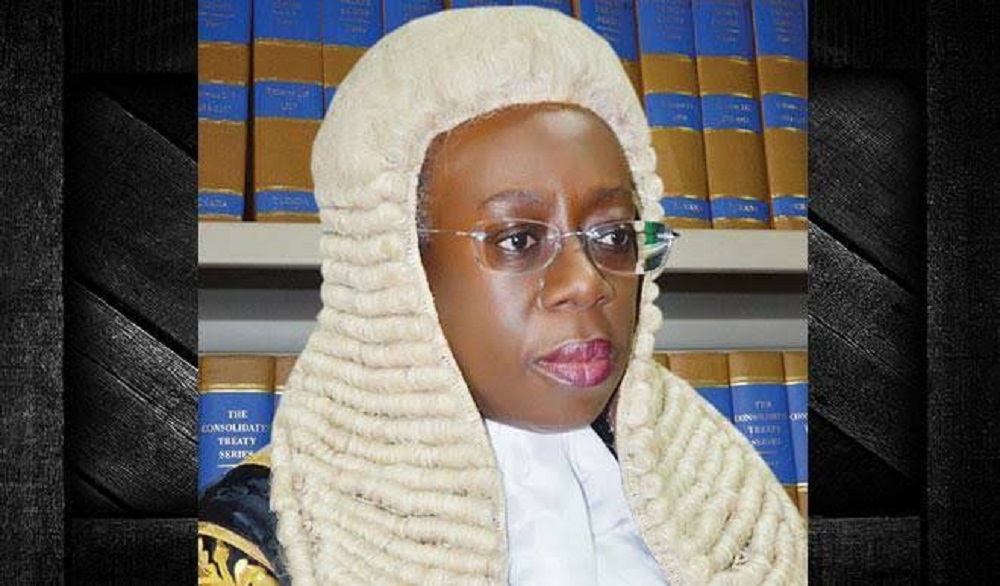





The Chief Justice of Nigeria (CJN), Justice Kudirat Kekere-Ekun, has said that the country’s judiciary is blessed with upright and courageous judges, saying that it is regrettable to note that there are few judges who are tarnishing the image of the judiciary.
Kekere-Ekun, who spoke on Saturday at a public discourse with a theme titled: Ethics, Morality, and the Law, organised by the Movement for Islamic Culture and Awareness in honour of Justice Habeeb Abiru’s elevation to the Supreme, praised Nigeria’s judiciary for its dedication.
She added that public acceptance of the law also hinged on its alignment with fundamental principles, the need for clarity, stability and independence of the judiciary, as well as the fair exercise of authority by the law enforcement.
Kekere-Ekun said, “The role of the legal practitioner within this framework, merits particular attention.
“The lawyer, often seen as both antagonist and protagonist in the pursuit of justice, must navigate a terrain where law, ethics and morality intersect.
“This dual role requires balancing the scriptures and the law with ethical constitutions, often containing with moral and legal questions that may seem at odds.”
The CJN added that the perspective of the ordinary citizen, who observed and assessed the extent to which ethics, morality and the law co-existed harmoniously in the society must be taken into consideration.
Kekere-Ekun also stated that the foundations of justice were influenced by the Abrahamic faith prevalent in the society, adding that both Islam and Christianity preach morality uprightness, and righteousness.
She said: “The role of the legal practitioner within this framework, merits a particular attention.
“This dual role requires balancing the scriptures and the law with ethical constitutions, often containing moral and legal questions that may seem at odds. As a minister in the temple of justice, the lawyer’s commitment to justice involves upholding legal standards, while advancing principles that follow society’s ethical expectations.
“The degree to which this alignment is achieved influences public trust in the judiciary and the law, affirming that our legal system should not only administer justice but also resonate with the community’s moral convictions.
Justice Kekere-Ekun further said : “I will say we take notes of everything that has been said. As the Honourable Attorney General of the Federation pointed out, and this happens in every sector of our society, it is unfortunate that by and large, our judges are knowledgeable, upright, courageous, and hardworking but few ones are giving us a bad name.”
She further disclosed that Nigeria is endowed with very hardworking and knowledgeable judges, warning however, that judges should remember that as “individuals we are accountable to ourselves and to God.”
In his remarks, the Emir of Kano, Muhammad Sanusi, asked Nigerian judges, especially justices of the Supreme Court to administer justice with the fear of God, and remember that they are accountable to God.
Emir Sanusi urged the judges to be upright and should not allow hatred for people to make them do what is not right.
He said judges should focus more on substantive justice, and not rely on technicalities
He said, “Do not be an advocate for wrongdoers and do not be an advocate for those who deceive themselves, because Allah does not love sinful wrongdoers”.
In his own comment at the event, the Attorney General of the Federation (AGF) and Minister of Justice, Prince Lateef Fagbemi (SAN), stressed the importance of fairness and integrity in the Nigerian legal system, urging legal professionals to recommit to ethical values.
The AGF said, “ The problem that we are discussing today is the problem of fairness.
“When we talk about fairness, which is the meaning of why we are here, we must acknowledge that we have wronged the laws”.
Speaking on the theme “Ethics, Morality and the Law – Christian Perspective,” Prof Konyinsola Ajayi (SAN), condemned what he termed “lawlessness in the law”, urging Nigeria’s legal professionals to reflect on the role of ethics and morality within the judiciary.
Ajayi also questioned whether the rule of law truly underpins current judicial practices, adding that the decisions of the courts often confused the public rather than provide clarity.
He said “The law today is providing the greatest uncertainty you can think about.”
Former Lagos State Governor Babatunde Fashola (SAN), who spoke at the event, also said the greatest tool that humans have invented is law, adding that law separates humans from animals.


















, Justice Kudirat Kekere-Ekun, has said that the country’s judiciary is blessed with upright and courageous)