
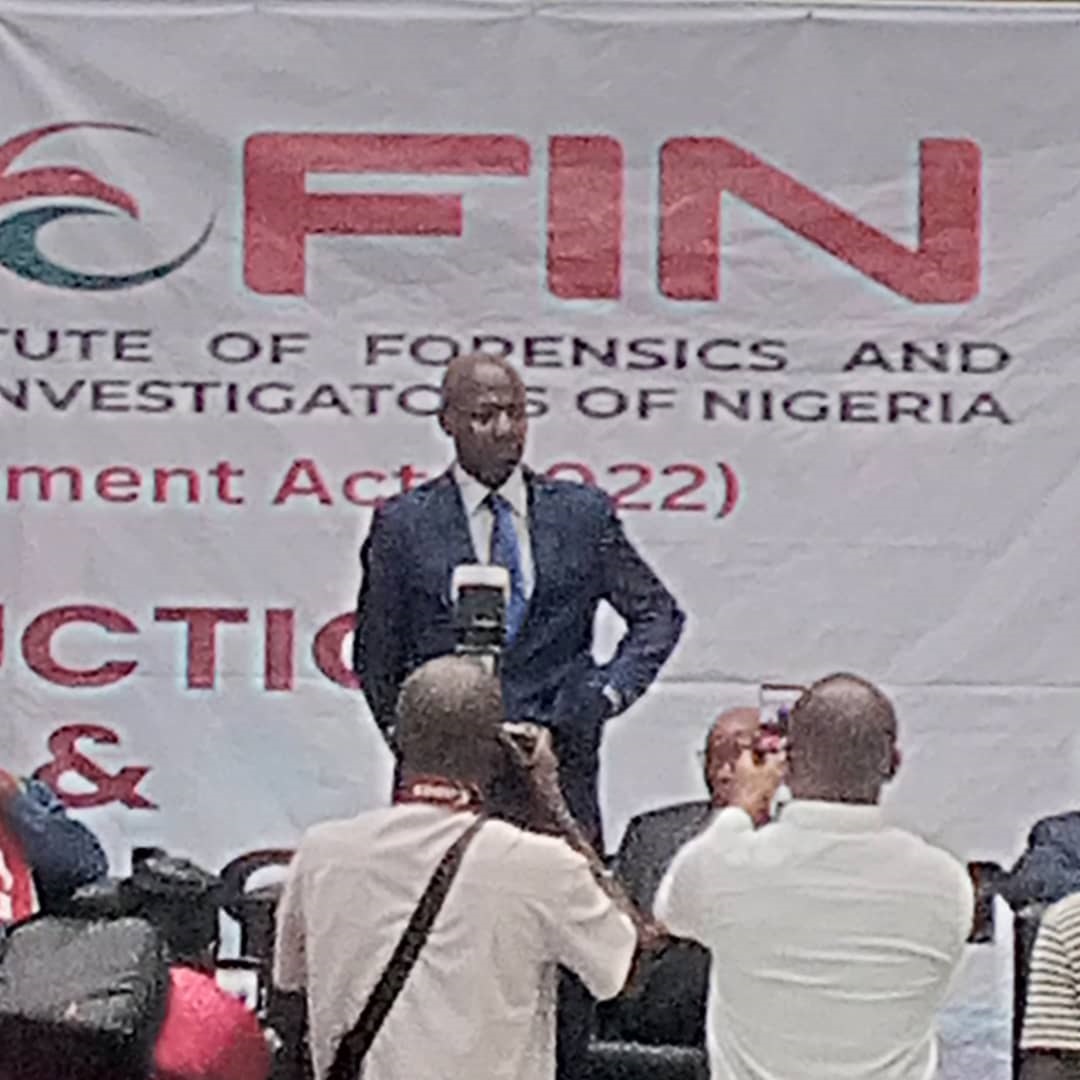





By El-Ameen Ibrahim, Abuja
Former Acting Chairman of the Economic and Financial Crimes Commission (EFCC), AIG Ibrahim Mustafa Magu (rtd), has called for the inclusion of anti-corruption education in Nigeria’s school curriculum, stressing that the fight against graft must involve all sectors of society.
Magu made the call on Thursday during his induction as a Fellow of the Chartered Institute of Forensics and Certified Fraud Investigators of Nigeria (CIFCFIN), held at the National Institute for Legislative and Democratic Studies (NILDS), Abuja.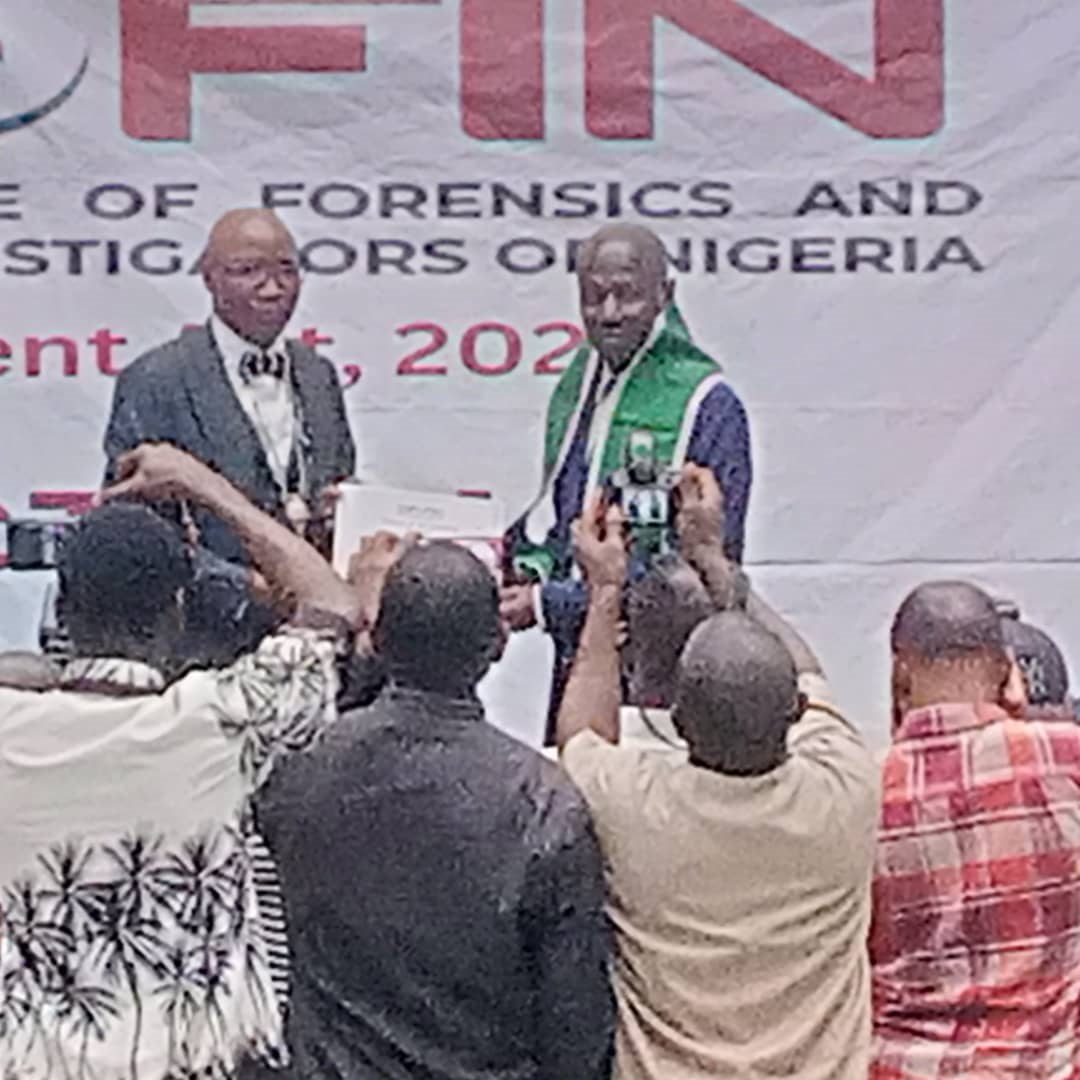
The former anti-graft boss was conferred with the prestigious title in recognition of his outstanding contributions to forensic investigation and his relentless efforts to combat financial crimes.
The honour, according to CIFCFIN, underscores his legacy of public service, professional excellence, and dedication to upholding integrity.
Speaking at the event, Magu stressed that the war against corruption cannot be fought in isolation, urging collective effort from all Nigerians.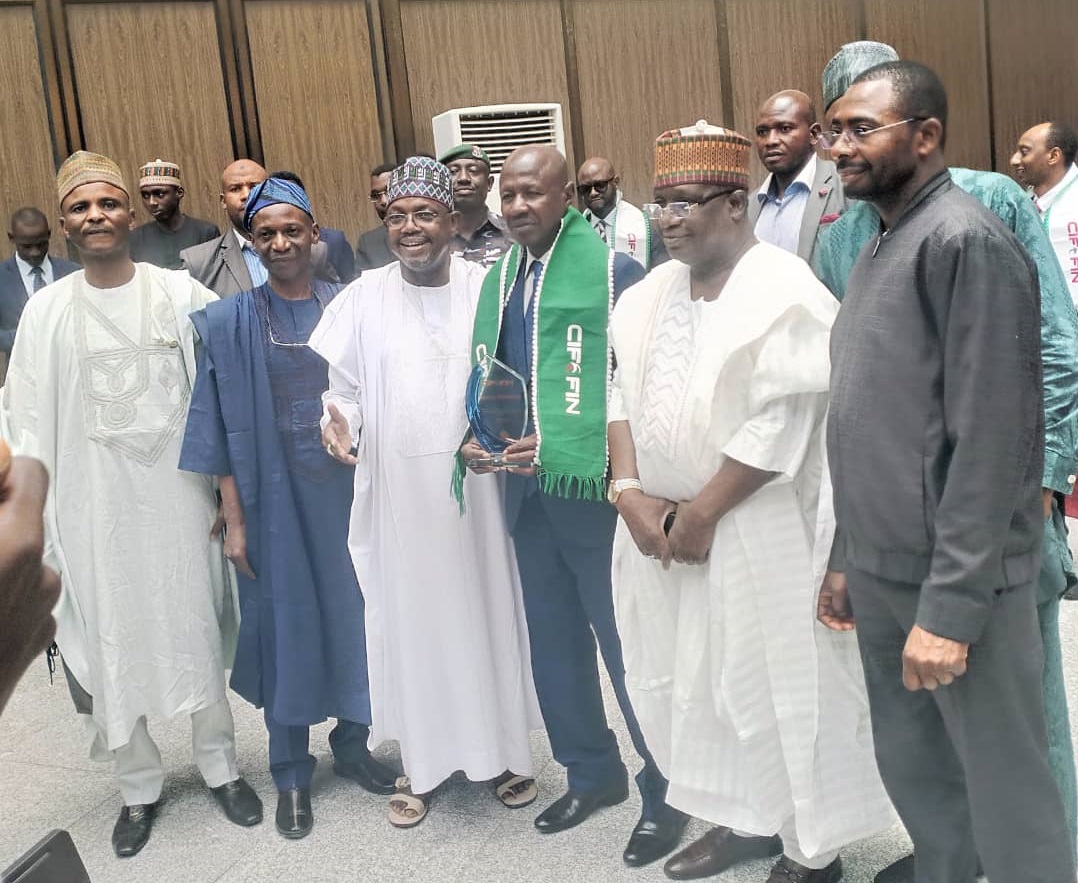
He said, “Corruption must be fought across the board. One man cannot fight corruption. Everybody is involved, whether you like it or not.”
The former EFCC boss also charged CIFCFIN to collaborate with the judiciary, schools, and professional bodies to strengthen the use of forensic evidence in courtrooms while integrating anti-corruption education into primary and secondary school curricula.
Recalling the challenges of establishing the Nigeria Financial Intelligence Unit (NFIU) and the initial public misunderstanding of money laundering laws, Magu underscored the importance of continuous public enlightenment.
The retired Assistant Inspector-General of Police (AIG) said, “I wish to state with high sense of responsibility that if you must have a very tight case, then you have to bring in the forensic aspect.
“It gives me encouragement to continue what we are doing, because forensic investigation is central to fighting corruption.”
Speaking to journalists after his induction, Magu expressed delight at the recognition, describing the development as both transparent and motivating.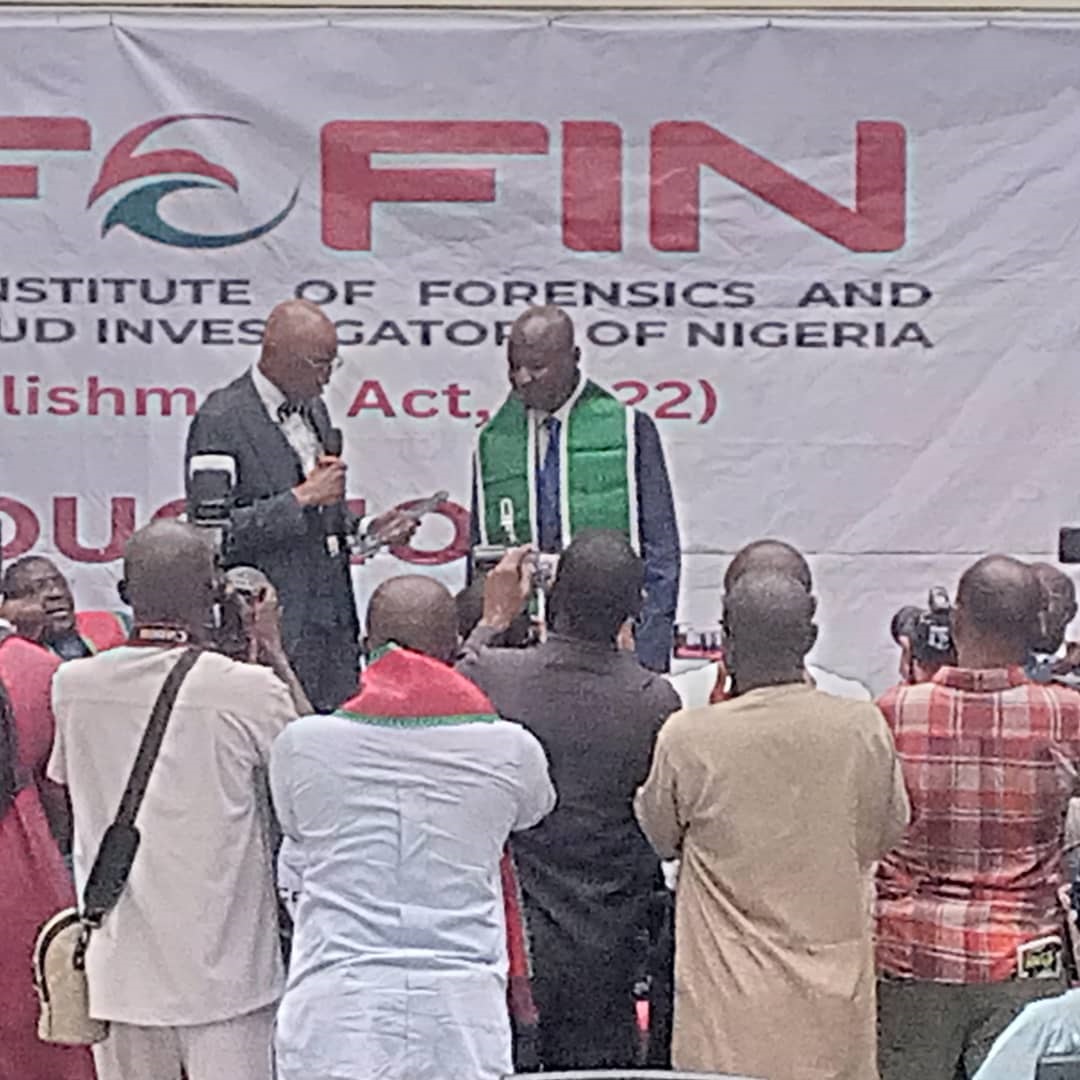
The Pioneer President and Chairman of the Governing Council of the CIFCFIN, Dr. Iliyasu Gashinbaki, commended Magu’s tenure at the EFCC despite the challenges, noting that history often vindicates those who fight corruption with integrity.
“Once you fight corruption, corruption will fight back. But history has a way of vindicating those who stand on the truth,” he said, describing the EFCC chairmanship as “the most difficult job in Nigeria.”
Magu’s professional journey is marked by a blend of academic distinction and hands-on expertise. Born on May 5, 1962, in Maiduguri, Borno State, he began his early education at Practising Primary School Yerwa before proceeding to Waka Biu Government Secondary School, where he graduated in 1980. He later obtained a Bachelor of Science degree in Accounting from Ahmadu Bello University (ABU), Zaria.
After his National Youth Service Corps (NYSC) in Benue State, he worked as a zonal accountant in the Borno State Ministry of Education before joining the EFCC. Over the years, he built a reputation as a seasoned investigator and anti-corruption advocate, respected both nationally and internationally for his work in combating financial crimes.
Magu holds a Post Graduate Certificate in Corruption Studies from the University of Hong Kong, Master’s degrees in Anti-Corruption Studies from the University of Abuja, and in Law Enforcement and Criminal Justice from ABU, Zaria. He is currently pursuing a PhD in Security and Strategic Studies at Nasarawa State University, Keffi.
His leadership helped shape the EFCC’s approach to forensic investigation and asset recovery, setting a benchmark for professional integrity and commitment. The fellowship award, therefore, stands as a testament to his contributions and enduring legacy in Nigeria’s anti-corruption crusade.
Magu’s recognition as a Fellow of Forensic Investigation not only celebrates his personal achievements but also serves as a reminder of the critical role forensic science plays in strengthening Nigeria’s justice system and sustaining the war against corruption.











, AIG Ibrahim Mustafa Magu (rtd), has called for the inclusion)