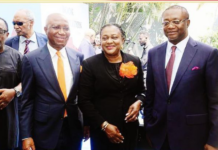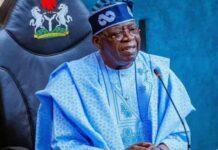





Senator Ned Nwoko has challenged the federal government to stop payments of expatriates in dollars, as part of urgent steps to halt the crashing value of the Naira.
He said in a statement in Abuja, yesterday, that the depreciation of the Naira has been worsened by the practice of paying for professional services in dollars , rather the Nigerian currency.
His words, “The alarming depreciation of the Naira against the dollar is exacerbated by the demand for foreign currency to pay professional services in dollars.
“This not only erodes confidence in the domestic currency but also widens socioeconomic disparities within the country.
“Distressingly, the absence of explicit prohibition on paying salaries in foreign currency in relevant legislation, such as the Central Bank of Nigeria Act and the Foreign Exchange Act, heightens regulatory ambiguity and allows such exploitative practices to persist unchecked.”
The law maker, therefore, urged Immediate actions to amend relevant provisions of the law to end the arbitrariness.
Accorsing to him, “Urgent amendments to these laws are imperative to address this issue effectively and ensure equitable treatment of all workers in Nigeria.
“The significant capital flight resulting from these unequal salary payments far surpasses most factors contributing to Naira depreciation, such as school fees and medical treatments abroad.
“Ending the practice of paying foreign workers in dollars is not only a matter of economic justice but also a crucial step towards dismantling neocolonial structures and building a more equitable and prosperous Nigeria for all its citizens.
“Continued acceptance of the dollar as legal tender undermines our economic sovereignty and must be halted. We must stop giving people the confidence to conduct business in Nigeria using foreign currencies.
“This practice not only undermines our economy but also perpetuates dependency on foreign currencies.”
Sen. Nwoko also advised that the federal government should reconsider the Foreign Reserves Policy, arguing it was “not only repulsive but also counterintuitive to Nigeria’s economic sovereignty.”
He added, “Contrary to the practices of other nations like the United States, Britain, France, and Japan, which keep their reserves within their own borders, Nigeria’s adherence to this practice raises questions about its colonial legacy. If our early indigenous leaders adopted this approach due to colonial mentality, why should we perpetuate it?”
The legislator observed that if Nigerians don’t get the Naira “to be needed, valued, known, and quoted, no one is coming to do it for us.”
He said that there could be opposition to the proposed reforms, particularly from oil companies and other corporations with agreements that could hinder the implementation of the proposed measures and hinder progress but that such agreements could be reviewed.
Expatriates, local workers wage disparity
Sen. Nwoko also condemned the wage disparity between Expatriates and Nigerian workers in the country.
According to him, the practice perpetuates historical injustice against Nigerians.
His words, “The glaring income inequality between foreign workers and their Nigerian counterparts within companies operating in Nigeria is a deeply concerning practice that perpetuates historical injustices rooted in the colonial legacy.
“This practice exacerbates existing economic disparities and reinforces the master-servant dynamic that has plagued the region for centuries.
“Historically, income inequality in Africa, including Nigeria, has been entrenched since the colonial era. European settlers exploited the vast resources of the continent while systematically marginalizing and impoverishing indigenous populations.
“This exploitation was not only economic but also deeply ingrained in social and political structures, leading to a stark income gap between Africans and their colonial overlords.
“During colonial rule, Africans were often relegated to low-paying labour roles while Europeans enjoyed privileged positions with significantly higher incomes. Of course this disparity was not based on merit or skill but rather on race and colonial power dynamics.
“The payment of foreign workers in dollars, while Nigerian colleagues receive wages far below the conversion rate, is a blatant example of this ongoing injustice.”