




The Federal Government has commenced moves to ensure that at least 70 per cent of rural dwellers are provided with modest Primary Healthcare Centres (PHCs).
The Federal Government has therefore called on all stakeholders particular governments at sub-national levels to come on board and acknowledge the value of taking healthcare closer to the people.
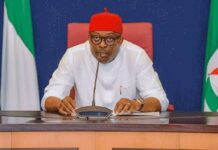
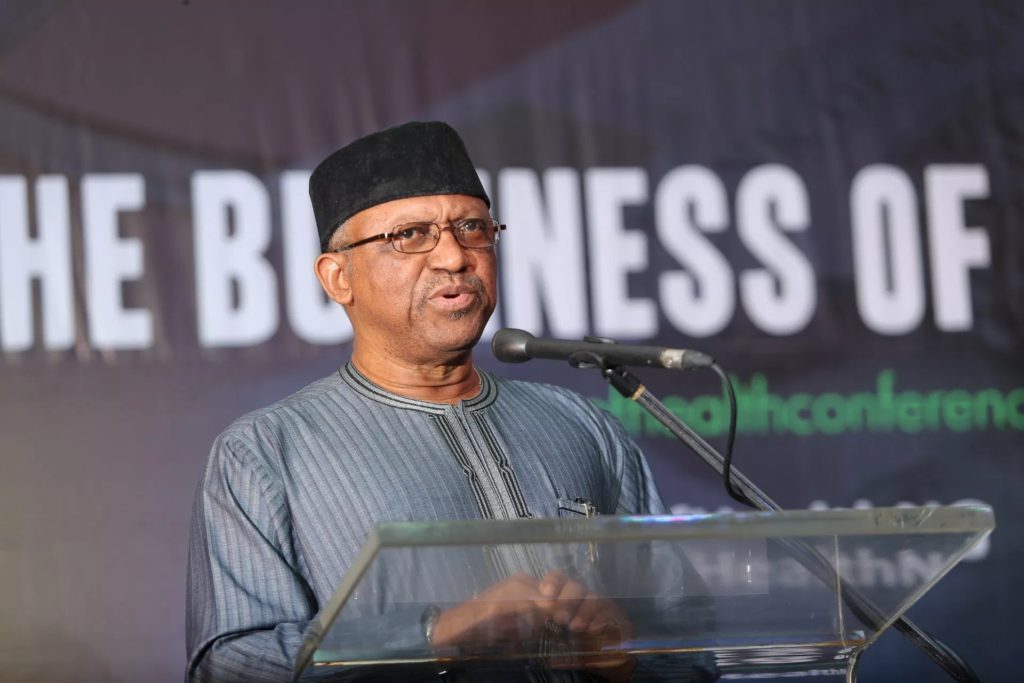
Speaking on Wednesday while addressing a World Press Conference ahead of the Primary Health Care Summit in Abuja, the Minister of Health, Dr Osagie Ehanire, noted that taking care of 70% of the health needs will help in increasing the nation’s productivity and GDP.
The minister, who lamented that high disease burden and frequent outbreak are the result of our weak PHC system, said most citizens in poor and rural areas, with very modest health needs, will not have the resources to pursue healthcare in the big city because of them, large, fancy, glamorous hospitals in the far-away capital city is unreachable.
He said, the government has developed a 10-year strategy to re-imagining PHC with a 4-point agenda for PHC revitalization.
Ehanire further pointed out that the recent experience with the Polio Eradication Initiative, the COVID-19 response, and the Ebola virus outbreak in 2014, confirms that when stakeholders pool attention and resources together, we achieve a collective goal.
He said, “The PHC Summit scheduled for the March 24-25, 2022 is to obtain the commitment of government and stakeholders towards the attainment of SDGs, UHCs and national health security by 2030, secure alignment and commitment to our 4-point strategy to transform PHCs; engage stakeholders to harmonize for mutual accountability in the implementation of the PHC agenda, and to secure the required resources for PHC revitalisation and sustainable financing of PHC financing in Nigeria.
“I know that we all greatly value health care, but for too long, we have instinctively misunderstood healthcare to be synonymous with large, glitzy buildings in the capital city. These well-intentioned hospitals are not on a foundation of a strong health system because the Primary and Secondary levels they rest on is very weak.
“We already have a good number of large hospitals without Teaching Hospitals and Federal Medical Centres and several private hospitals in major cities; they do not address the most pressing health needs of the majority of the people in rural areas.
“At this state of our development, the first priority needs to revert to simple Basic Healthcare Provision, which we need stakeholders to align with, is to kick-start the implementation of our 4-point Agenda for PHC revitalisation.
“I seek the attention of policy and decision-makers and influencers; the private sector, philanthropists, health-oriented businesses, PHC Strengthening stakeholders in Nigeria and Africa; and global, regional and the supportive media.
“I am glad to inform you that this initiative is fully supported by His Excellency, Mr President, to underscore the Government’s commitment to PHCs.
“I therefore urge the media to promote the PHC Summit among Nigerians and friends of Nigeria. I use this opportunity to commend the media for all your support and commitment to the improvement of the health of our people.
“To the private sector, we appreciate and commend your investment in the health sector, especially in support of the COVID-19 pandemic response. We are motivated by your support, which we do not take for granted.
“Our traditional and religious leaders have remained our dependable allies in ensuring community support. Without dependable donors and partners, we could not achieve the modest progress we have made.”
Earlier, the Executive Director of the National Primary Health Care Development Agency (NPHCDA), Dr Faisal Shuaib, lamented that the problems of lack of primary health care are staggering, adding that the problems dwarf the impact of COVID-19 on Nigeria’s population.
Shuaib further disclosed that 128 of every 1,000 children under 5 in Nigeria die and 20% of global maternal deaths happen in Nigeria.
He said, “It’s heartbreaking and we must treat it as the emergency it is. Fewer than half of Nigerians have access to quality primary health care services. Even those that do are offered fragmented and often ineffective services.
“Investment is siloed into dedicated programmes like polio, malaria or HIV – instead of an integrated programme of infectious and chronic illnesses.
“There is a key point I want to make to you today: our health system doesn’t need to be this way. We have proven that we know how to solve complex health problems when it is made a priority by governments, multilateral organisations and the private sector.
“It is important to emphasize that the private sector has increasingly assumed a critical role in achieving social development goals, and we are grateful that they believe in this programme as much as we do.
In his goodwill message, the World Health Organisation (WHO) Country Representative, Dr Walter Kazadi Molumbo, on behalf of the Development Partners, said the situation has necessitated a need for a more radical approach to restructure and re-focus the health system, with considerations to support the Primary Health Care level, which is the cornerstone of the health system.
Molumbo also said the Universal Health Coverage (UHC) is a critical component of the Sustainable Development Goals (SDGs), especially Goal 3: “Ensure healthy lives and promote well-being for all at all ages” which emphasizes the need for health to be accessible, equitable, safe, effective, quality and affordable without the risk of financial hardship.
“Therefore progress towards UHC will involve building and extending equitable, resilient and sustainable health systems that are based on primary health care.
“The achievement of which requires political will, deliberate and intentional effort for resource mobilization, especially domestic resources, and local ownership for sustainability.
“In 2018, Heads of State and Government, ministers and representatives of States and Governments, came together at the Global Conference on Primary Health Care: From Alma-Ata towards universal health coverage and the Sustainable Development Goals, meeting in Astana, to recommit to the 40 year old vision of the Alma Ata declaration on Primary Health Care.
“This Summit is an attempt to domesticate that commitment, serving as a clarion call to leaders, advocates, partners and stakeholders in the Nigerian health sector to re-echo and operationalize the commitment made at Astana.”
Eduardo Celedes, who represented the UNICEF Country Representative, Peter Hawkins, said, “Investing in PHC is a choice because resources are always limited . More than 2000 children die every day as a result of diseases. Investing in PHC is the right choice. This will respond to the 90 per cent of the health needs of the people, especially women and children.
He said, “The country is facing many public health emergencies – COVID-19, polio, measles. These are crises but also opportunities to transform the PHC. Yesterday, 10 million Nigerians were fully vaccinated.
“The summit is an avenue to discuss incentives to ensure that everyone has access to health services without incurring huge costs.”