

…Fixes March 3 for judgement
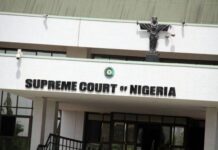
The Supreme Court , on Wednesday, held that its interim order on naira swap is still in force, insisting that the old N200, N500 and N1,000 notes remain legal tender in the country.
The apex court also fixed March 3 for its judgement in the various applications including the preliminary objection by the Attorney-General of the Federation, Mr Abubakar Malami (SAN).
The apex court, which heard the case on Wednesday, was filled to capacity with a retinue of Senior Advocates of Nigeria and other lawyers.
The Supreme Court had temporarily banned the implementation of the February 10 deadline of the CBN from making the old N200, N500 and N1,000 notes legal tender.
The Zamfara, Kogi and Kaduna states had filed the suit against the Federal Government and the CBN.
Other states, namely Niger, Kano, Ondo, Ekiti, had also applied to be joined in the suit against the CBN and the Federal Government.
Lagos State through its Attorney General, Moyosore Onigbanjo (SAN) also applied, seeking to be joined in the suit.
But Bayelsa State, led by Damian Dodo (SAN) had also applied to be joined in the suit as a co- respondent with the Federal Government. Edo State also applied to be joined as a co- respondent to the suit.
The apex court also consolidated the suits instituted by over 12 state governments.
At the last hearing of the matter on February 15, seven states joined the three initial states as co-plaintiffs, while Edo and Bayelsa states joined the Federal Government as co-defendants. The court, however, refused to join Abia State in the suit on the ground that it came late with its originating summons.
All efforts by Abia State Government to be joined in the suit, was turned down and was ordered to present its case at a later date.
A motion for the consolidation was also argued by the lawyer to Rivers State, Emmanuel Ukala (SAN). Moving the motion on notice, Ukala premised the consolidation request on the need for the suit to be heard without any hinderance since the matter bothers on same issue.
The head of the 7-man panel, Justice John Okoro, consequently granted the request and ordered consolidation of the 10 suits into one.
The plaintiffs in the suit are now the Attorneys General (AGs) of Kaduna, Kogi, Zamfara, Ondo, Ekiti, Katsina, Ogun, Cross River, Sokoto, and Lagos states while the defendants are the Attorney General of the Federation, Abubakar Malami (SAN), as well as the AGs of Bayelsa and Edo states.
Commencing arguments, the lead lawyer to the Federal Government, Kanu Agabi (SAN) said the Supreme Court held that all reliefs are rooted in section 20 of the CBN Act, arguing that the apex court has no jurisdiction to hear the suit as the action cannot commence with an Originating Summons.
He wondered why the plaintiffs did not bring the CBN governor to court as a respondent, after making reference to him 32 times in their Originating Summons.
He said the reliefs are against the CBN, yet they didn’t deem it fit to bring the CBN into the matter. He added that Nigerians had already began rejecting the old notes before the President’s directive.
He insisted that the President is not in violation of the Supreme Court order as under the constitution, the President is empowered to veto any legislation.
Lawyers to Edo and Bayelsa States, also agree that the suit should be dismissed for lack of jurisdiction.
But the lawyer to Rivers State urged the court to grant all the reliefs sought therein.
The lawyer to the AGF, also urged the court to dismiss the suit in its entirety.
Also, the Attorney General of Kano State, who is a co-plaintiff, argued that President Muhammadu Buhari sidelined members of the National Economic Council and only relied on the advice of the CBN governor in the implementation of the monetisation policy.
He added that the President decided to exercise his powers without consulting with the state governments as required by the law.
He further said that the states have security report that there will be breach of law and order if nothing is done to address the issue of cash scarcity.
He added that the Kano State Governor, Abdullahi Ganduje is a member of the council and he told him that the issue was never discussed at the NEC meeting.
Rather, he said the President relied only on one member of the council, and the CBN governor ignored the Minister of Finance and the Vice President who is the chairman of the council.
He also pointed out that the President can direct that the old N200 notes be brought back as a legal tender, then he is under the jurisdiction of the Supreme Court.
Also, the Attorney General of Jigawa stated that Section 148 of the constitution, compelled the President to seek the advice of the Jigawa State governor as a federating unit but the President did not do so in the Federal Government’s implementation of the redesign policy.
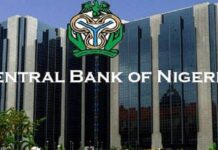
It is instructive to note that Central Bank of Nigeria (CBN) had extended the deadline for the swap of old N200, N500, and N1,000 from January 31 to February 10 following complaints by many Nigerians.
But the Supreme Court, after a suit filed by three states, held that the Federal Government, the CBN, commercial banks must not continue with the February 10 deadline pending the determination of a notice in respect of the issue on February 22.
President Muhammadu Buhari had ,however , in a national broadcast last Thursday, directed the apex bank to release only the old N200 notes into circulation to co-exist with new N200, N500 and N1,000 banknotes for 60 days — April 10, 2023. He also said old N500 and N1,000 banknotes had ceased to be legal tender in Nigeria.
There has been a flurry of reactions and stark criticisms against the President’s directive including from governors of his party, the All Progressives Congress (APC).
Governors Nasir El-Rufai (Kaduna), Abubakar Badaru (Jigawa), Rotimi Akeredolu (Ondo), Umar Ganduje (Kano); Speaker of the House of Representatives, Femi Gbajabiamila; Minister of State for Labour and Employment, Festus Keyamo; and many stalwarts of the ruling APC have openly censured and faulted the President’s directive, arguing that there is no basis for the President’s directive on the grounds that the case is before the apex court.
Leading Senior Advocates of Nigeria including Femi Falana and Mike Ozekhome have equally faulted the President’s move, saying he cannot overrule the apex court, the final court in the land.
Also, three State Governors- Kaduna, Zamfara and Kogi have filed another suit against Malami, and the CBN Governor, Godwin Emefiele over contempt of apex court and their alleged failure to comply with the Supreme Court order on the old naira notes.