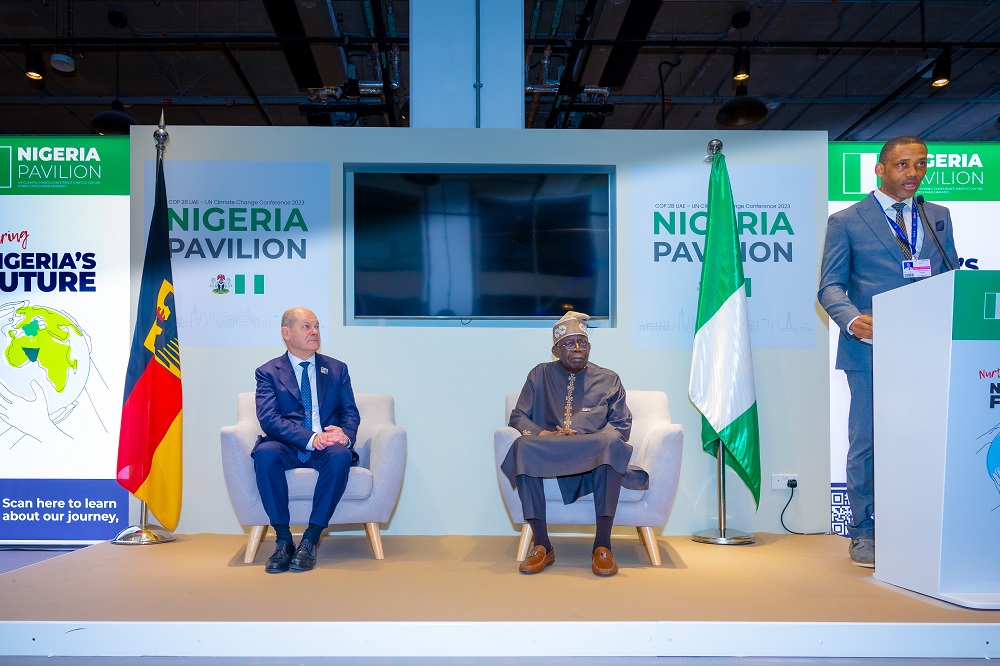





President Bola Tinubu and German Chancellor Olaf Scholz on Friday evening in Dubai, United Arab Emirates, witnessed the signing of an accelerated performance agreement aimed at expediting the implementation of the Presidential Power Initiative (PPI) to improve electricity supply in Nigeria, with the target of adding 12,000 MW into the national grid.
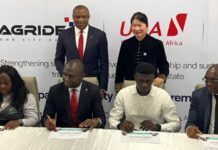
The agreement, consummated on the sidelines of the COP28 climate summit, was signed by Mr. Kenny Anuwe, the Managing Director and CEO of FGN Power Company, and Ms. Nadja Haakansson, Siemens Energy’s Senior Vice President and Managing Director for Africa.
The Special Adviser to the President on Media & Publicity, Ajuri Ngelale, stated this in a statement made available to TheIdeal News on Friday.
The PPI, formerly known as the Nigeria Electrification Roadmap Initiative, was the outcome of the visit of former German Chancellor Angela Merkel to Abuja in August, 2018.

An agreement was signed between the governments of Nigeria and Germany in 2019 to improve the power sector.
President Bola Tinubu, since assuming office, has consistently advocated the accelerated realization and expansion of the PPI. To achieve this, the project has been a major focal point in three rounds of bilateral discussions at several meetings between the President and the German Chancellor, in New Delhi, Abuja and Berlin.
Incidentally, the agreement signed on Friday will see to the end-to-end modernization and expansion of Nigeria’s electric power transmission grid with the full supply, delivery and installation of Siemens-manufactured equipment under the time line of 18 to 24 months.

Furthermore, the agreement will ensure project sustainability and maintenance with full technology transfer and training for Nigerian engineers at the Transmission Company of Nigeria (TCN).
Speaking after the signing ceremony in Dubai, Managing Director of the FGN Power Company, Mr. Kenny Anuwe highlighted Siemens Energy’s effective delivery of crucial equipment worth over 63 million Euros to the country since the project commenced. This includes 10 units of 132/33KV mobile substations; 3 units of 75/100MVA transformers, and 7 units of 60/66MVA transformers, currently being installed by FGN Power Company at various sites across Nigeria.
The project will also focus on identified load demand centres with a particular emphasis on economic and industrial hubs nationwide; execution of new 330kV and 132/33KV substations in target load centres with economic priority, in addition to thousands of kilometres of overhead transmission lines to connect new substations with existing ones.
In his remarks at the event, the Minister of Power, Chief Adebayo Adelabu, said the target of the PPI is to add 12,000mw of electricity to the national grid, saying that with the signing of the agreement on Friday, the process will now proceed apace to ensure constant supply of electricity to Nigerians.
He said: “Of course, we knew that there were a lot of delays between 2018 and now that we have not really made significant achievement in terms of proceeding with the contract signed in 2018 because of a lot of factors some were natural, some human, some were processes.
“We also had COVID in 2020 which made the execution of the project slow. But now, it shows that we are now ready to move forward with the Siemens projects.
“It shows a commitment between the government of both countries to proceed with this project, which we believe will go a long way in improving the performance of the power sector in Nigeria.”