




There are indications that the economic realities Nigerians are facing since the Federal Government effected further increment in the pump price of fuel has prompted a crucial meeting with the Nigeria Labour Congress (NLC) and Trade Union Congress (TUC) at the instance of the Secretary to the Government of the Federation, George Akume.
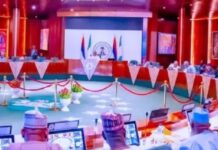
As at the time of filing this report the meeting was said to be ongoing at the SGF Office, Aguda House, located close to the National Assembly.
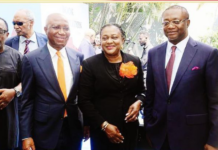
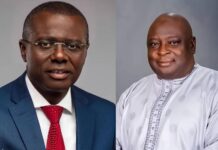
Among top government functionaries said to be attending the meeting were Mallam Nuhu Ribadu, the National Security Adviser (NSA); Nkeiruka Onyejeocha, Labour Minister; Wale Edun, Minister of Finance and Coordinating Minister of the Economy.
Others are Alhaji Mohammed Idris, Information Minister; Heineken Lokpobiri, Petroleum Minister, State (Oil); Ekperikpe Ekpo, Minister of State for Petroleum Resources (Gas), and representatives of the Nigerian National Petroleum Company Limited (NNPCL).
Recall that the Federal Government, through the NNPCL, had increased the pump prices of fuel to N998 and N1,030 in Lagos and Abuja, respectively.
While most Nigerians reacted negatively to the increment, stakeholders in government and the energy sector have been unsettled over the inflationary trend and suffering by the people.
Our reporter also gathered that shortly after the meeting at the SGF office, the labour leaders retired to the NLC secretariat to review their discussions.
It was learnt that the meeting centred largely on the Compressed Natural Gas (CNG) conversion centres being unveiled across the FCT and some states. The consequential adjustments in the recently assented N70,000 national minimum wage, among other pressing issues.
The meeting was said to have been adjourned to a later date for conclusion but they were not specific on the adjourned date because the Secretary to the Government of the Federation was instructed by President Bola Tinubu to lead a delegation to Jigawa State to pay condolence to victims of the tanker explosion late Tuesday night.
Daily Independent also gathered that the Federal Government has begun the implementation of the N70,000 minimum wage after the National Salaries, Incomes and Wages Commission released a template detailing the consequential adjustments in the new salary structure according to grade levels.
Wednesday’s meeting with labour also provided the Minister of Budget and Economic Planning, Atiku Bagudu, the opportunity to reel out some of the economic trajectories and efforts to get the country out of the woods.
He reassured that the worst was over.
He reacted to the recent World Bank’s claim at the National Economic Summit Group forum in Abuja, that most of the oil wealth goes into feeding the lifestyle of the elite.
Bagudu’s said during the parley with labour at the SGF office, “When the National Economic Summit Group finished a three-day interactive session and the Corporate Nigeria Civil Society Organisation Development Partners where Tinubu was represented by His Excellency, the Vice President.
“The consensus of the three-day summit was that, tough as they might be, our president led us to take decisions that we needed to have taken.
“Of course, tough decisions might come with some challenges and consequences, we are dealing with them, which is part of what we are asking. Why is there a spike in inflation for September 2 percentage point, following the decline we talked about? But because of the energy prices that were yet to stabilise it affected oil prices.
“But beyond that, just borrowing from, again, what has been said at the consensus, is when you are undertaking reform, is to stay the course. And the benefits will follow. We are in the tick of a harvest season.
“We believe that that will further impact on food prices. Most of the measures that have been taken are beginning to yield to greater levels of investment and effort to mobilise more investment, which we believe will cement the rise in gross domestic product. Our gross domestic product for the first quarter increased by over 2%, close to 3%.
“In the second quarter, it went by 3.19%. Some people will say, it sounds too slow. But let me give you how big that number is. Germany, which is wealthier than us, which have more resources to respond to any challenge, has declined by 0.3%. UK is struggling at minus 0.2%. Why is all this happening? Why are we not growing fast enough? Because that’s what we need.
“We need to grow fast enough at a higher rate. That is why we are taking all the fearful measures, so that we put Nigeria on a sustainable, inclusive, higher rate of growth. That will make all of you, our younger ones, be very proud of the country that God has blessed us with. In doing so, we might experience occasional hiccups.
“I want to ask you, now, going forward, now, what is the message, particular message that you have for Nigeria’s youths, with regard to the period of time, three months, time, six months? We believe we have stopped the decline. We are not where we want to be. Look, our president’s message in the Refueled Hope agenda is, let us confront our reality.
“Let us tell ourselves that we are not as rich as we thought we are, so that everyone can mobilise, whether it is at the family level or at the national level. Frank discussion can help mobilise everyone to a greater action. So that’s what we are doing.
“No blame game. If we spend all the time discussing what went wrong, who did what wrong, maybe we may not agree. But the fact that we are not where we want to be is enough cause for action.
“So what are those choices we need to take? We took the bold choices. Today, state governments, local governments, and Federal Government are better funded. Of course, inflation is there, cost of living challenges.”