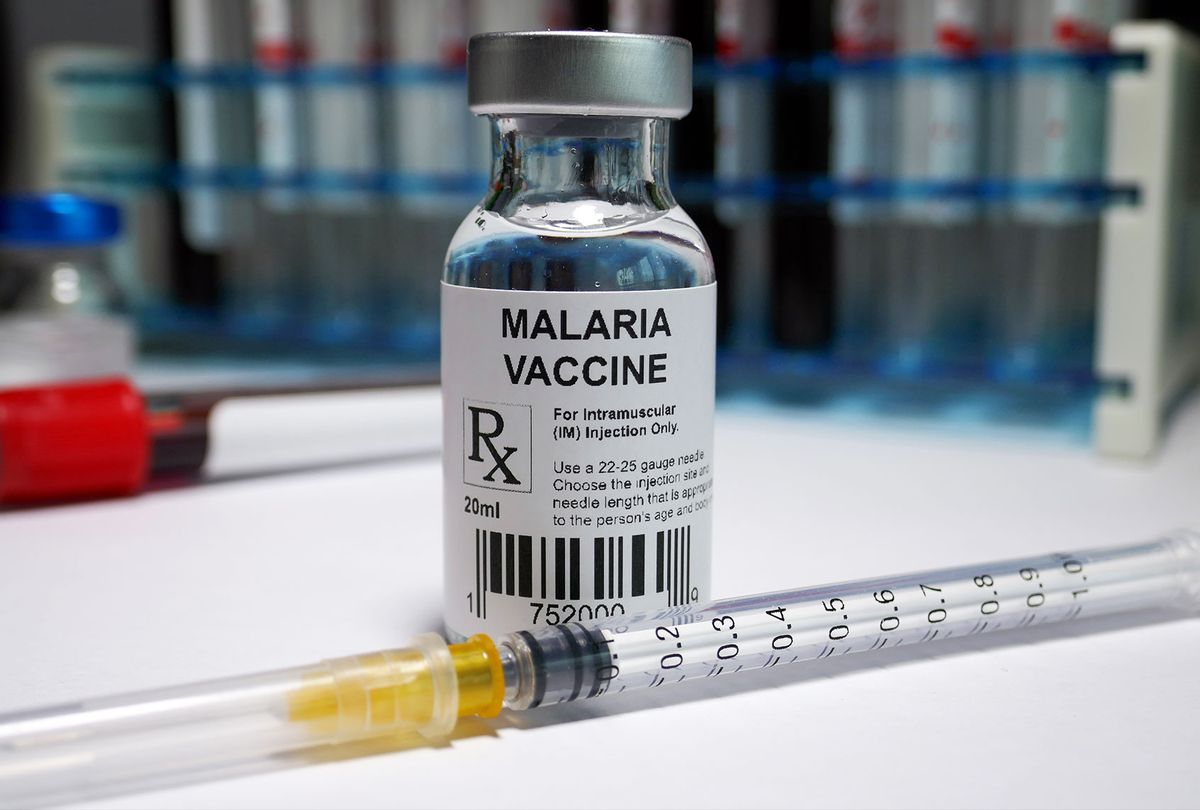





The World Health Organization (WHO) has announced that more than one million children in the African countries of Ghana, Kenya, and Malawi have received one or more doses of the world’s first malaria vaccine, RTS,S/AS01 (RTS,S).
First launched by the Government of Malawi in April 2019, the RTS,S/AS01 (RTS,S) vaccine has been found safe and substantially reduces deadly severe malaria.
GSK’s Mosquirix RTS, S/AS01e (RTS,S) is a recombinant malaria vaccine that aims to trigger the immune system to defend against the first stages when the Plasmodium falciparum malaria parasite enters the human host’s bloodstream through a mosquito bite and infects liver cells.
If widely deployed, the WHO estimates that the vaccine could save up to 80,000 African children each year.
In a statement made available on Friday, the WHO Director General, Dr. Tedros Adhanom Ghebreyesus, also disclosed that, “As a malaria researcher in my early career, I dreamed of the day we would have an effective vaccine against this devastating disease.
“This vaccine is not just a scientific breakthrough, it’s life-changing for families across Africa. It demonstrates the power of science and innovation for health.
“Even so, there is an urgent need to develop more and better tools to save lives and drive progress towards a malaria-free world.”
RTS,S is a first-generation vaccine that could be complemented in the future by other vaccines with similar or higher efficacy, such as R21/Matrix-M.
The WHO also welcomes the news from BioNTech that it aims to develop a malaria vaccine using mRNA technology.