






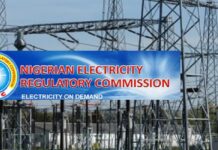
The Managing Director/CEO of Nigerian Rural Electrification Agency (REA), Engr Ahmad Salihijo Ahmad, has disclosed that the agency has completed the installment of 67 mini-grids and provided electricity for over 5 million households under the Nigeria Electrification Project (NEP) as part of efforts to deepen the country’s access to electricity.
Salihijo Ahmad spoke at the weekend in Abuja while briefing journalists on the activities of the agency.
The REA boss also stated that NEP was borne out of a need for the administration of President Muhammadu Buhari to sustainably tackle the problem of energy access, whilst stimulating economic growth and impacting positively on the Lives and livelihoods of Nigerians.
He said , “The Nigeria Electrification Project (NEP) is an initiative of the Federal Government implemented by the REA to accelerate the off-grid renewable energy private sector market and bridge the overall energy access deficit.
“The NEP aims to achieve this by providing electricity to households, MSMEs, educational and healthcare facilities in unserved and underserved rural communities through the deployment of solar hybrid mini grids, Solar Home Systems (SHS), captive hybrid power plants and energy efficient productive use equipment/appliances.
Ahmad further disclosed that the Federal Government had secured $550million financing from both the World Bank ($350million) and the African Development Bank ($200million) for the implementation of the project in alignment with the rural electrification strategy and implementation plan and the power sector recovery plan.
Speaking on need for more private sector investment in the delivery of public infrastructure, Ahmad said that about $64.8 million has so far been disbursed out of over $392 million committed for the project.
The REA boss also stated that some programmes were designed for the private sector to be able to take advantage of the sector including the capital subsidy, where the public and private sectors collaborate and which has become an international standard in the sector.
He explained that the programme was designed in such a manner that delivery of infrastructure is solely based on the performance of the private sector, which will come in and identify needs but are not paid till they complete the project and run it for three months.
He added that the provision of power remains a viable business in Nigeria, saying that the REA has begun the implementation of Standard Operating Procedures (SOPs) and had done a thorough technical evaluation of its projects.
Also speaking at the event, NEP’s Head, Project Management Unit, Ms Anita Otubu, disclosed in her presentation that the World Bank’s $350m is being implemented through five components, including Solar Hybrid Mini Grid, Standalone Solar Home Systems (SHS), Energizing Education Program Phase II (EEP II) and Technical Assistance; while the AfDB’s $200m is being implemented through the Solar Hybrid Mini Grid, Energy Efficient Productive Use Equipment (PUE), Energizing Education Program Phase III (EEP III) and Technical Assistance components.
She said, “Through these five (5) consolidated components, the system was designed to provide new or improved electricity access to approximately 2.5 million people, 705,000 households, 90,000 MSMEs, healthcare facilities, 15 Universities and 3 associated Teaching Hospitals, while deploying 22,692 productive use equipment and appliances to mini-grid communities for demand stimulation and sustainability.
“Since its effectiveness in 2019, the NEP has been managed by the Project Management Unit (PMU) which comprises consultants with expertise in various technical fields, seconded staff from the REA, Office of the Accountant General of the Federation, as well as a team of support staff.
“For a transparent and methodical implementation of projects under the NEP, the PMU also engages a robust monitoring, evaluation, learning and due diligence framework which involves the engagement of a web based M&E platform, Independent Verification Agent, Grant Administrator, Project Owners Engineer and Legal Support.”
Otubu further disclosed that the solar hybrid mini grid component aims to support the development of private sector mini grids nationwide with a total fund allocation of $1 95m.
She said, “The component targets to electrify 405,000 households, 50,000 MSMEs, 100 isolation/treatment centres and 400 primary healthcare centres.
“The objectives of this component are to provide clean, safe, affordable electricity to unserved and underserved communities; and increase business productivity.”














, Engr Ahmad Salihijo Ahmad, has disclosed that the agency has)