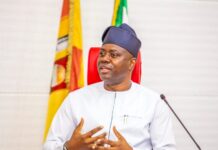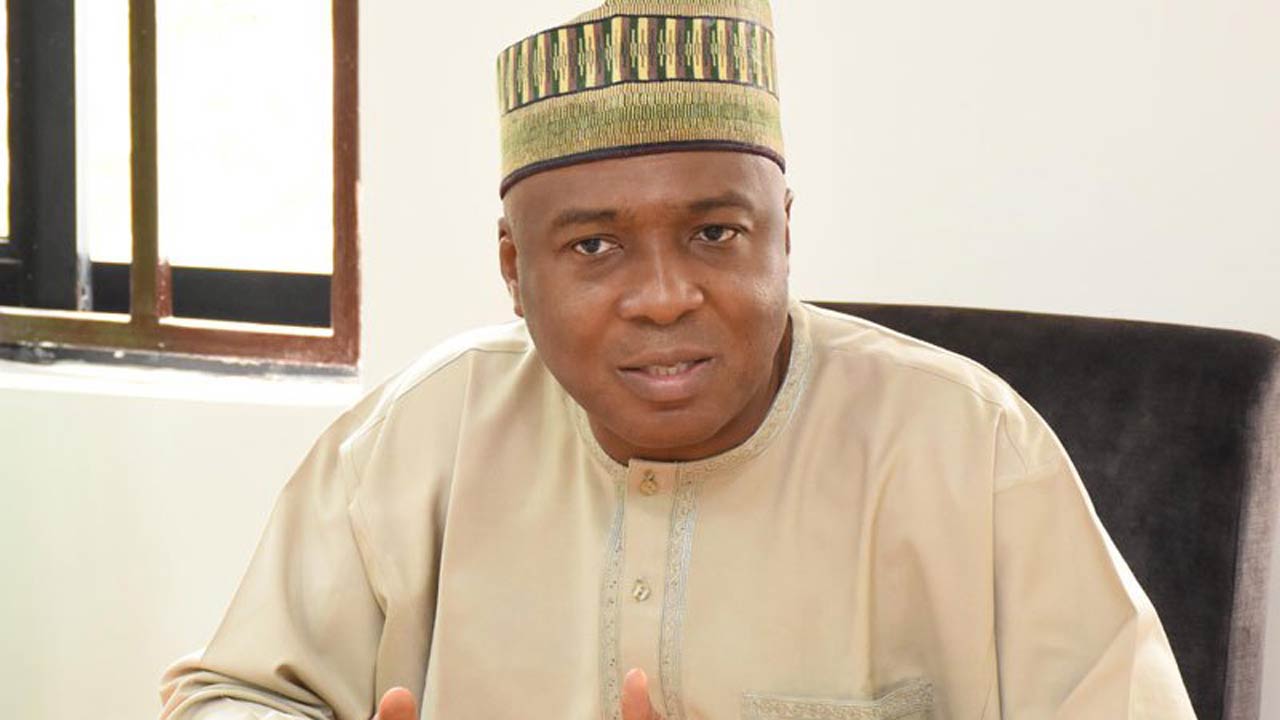





Former Senate President, Bukola Saraki, has regretted that Nigeria has more accidental leaders which is the reason the country has continued to have challenges.
Saraki stated this on Saturday when he presented a paper entitled, ‘Empowering the Future from Legacy to Infinity’, at the 2025 reunion gala celebration of Kings College Old Boys Association (KCOBA) of North America at the National Space Centre, Houston, Texas, United States of America.
“As you know, any country that misses the opportunity of being led by its best and most prepared, while accidental and ill-prepared people force their way into leadership positions, often will face tough challenges of development.
“Our country has had more accidental leaders who just found leadership trusted in them by strange circumstances, not people who have been prepared and are prepared to lead.
“It’s very gratifying to see that all of you KCOB in North America are excelling as individual professionals – medical doctors, engineers, computer experts, accountants, financial gurus, legal practitioners, and so on – businessmen, bureaucrats, and other endeavours.
“Apart from those of us gathered here and those trained in KC, we have our fellow countrymen who are world-beaters across the globe. Adewale ‘Wally’ Adeyemo was Deputy Secretary of the Treasury; Adebayo Ogunlesi, chairman of Global Infrastructures Partners; Dr. Oluyinka Olutoye, the renowned Nigerian-American pediatric surgeon and a leading expert in fetal surgery, and Brig. Gen. Amanda Azubuike, the first and only black US female army general, to name a few. And of course, Kemi Badenoch, the current leader of the Conservative Party in the UK.
“Everywhere, Nigerians are excelling. What this scenario further tells us is that as individuals, we are successful, but as a collective, we have failed because our country has remained unable to fulfill its manifest destiny as a leader in Africa and the world. How can a country produce this constellation of global stars, and it is not a leading country even in Africa? This is food for thought. It is something I want all of us to ruminate about after we leave this event. I want the conversation to continue beyond this event.
“This is necessary because the issue of why we have not produced leaders who will take the country to the promised land or achieve genuine development with a high standard of living for the people is one question that will not go away.
“We’ve failed because our best hands and heads refuse to venture and offer themselves for leadership. Those who constitute the followership have also failed to play their good roles by being discerning in choosing leaders. They often fail to hold the leadership accountable. There is an argument as to whether every society is a reflection of its leaders or if the leaders are a reflection of the general society from which they emerge.
“Whichever side of this debate we take, what is certain is that no leader can achieve success by accident or bring about positive changes by accident. Development can only be achieved in any society by intentional actions and well-designed, carefully thought-out, and efficiently implemented policies, programmes, plans, and projects introduced by the leadership and supported by the followership.
“That is why we also have to be deliberate in improving the quality of leadership and be ready to hold those who emerge as leaders responsible for delivering on the promises of good governance to the people. To do this, we should all come out of our shells.
“Let’s stop the idea that politics is dirty, too rigorous, demanding, and invasive of our privacy. German poet and playwright, Bertolt Brecht, warned that when competent professionals stay off politics, they allow incompetent people who can dare to decide how their society will progress and what obtains in their communities.
“My observation is that with the way the military perpetuated itself in power between 1983 and 1999 through frequent shifts of the promise to hand over power to civilians, when they eventually chose to exit power, many serious-minded Nigerians, particularly top professionals, did not believe them. Thus, the best of the country, young and old, stayed off the politics of transition that led to the birth of democracy in 1999.
“The people who dominated the politics that led to the return of democracy were not the best the country could provide. They were mainly those who had nothing to do and saw politics as an end in itself or a means to earn their survival. They came in with all the dirty tricks and deadly tactics that the populace had learnt from the military.”