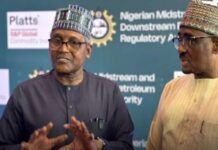





Legal luminary and foremost human rights lawyer, Mr Femi Falana (SAN), has called for legal recognition and enforcement of socio-economic rights of Nigerians, saying that it is patently illegal to say that socio-economic rights are not justiciable or enforceable by Nigerian courts.”
Falana spoke during a lecture he delivered at a meeting organized by the Nigerian Bar Association (NBA) on Tuesday in Lagos.
The lecture is titled: “Justiciability of Chapter Two of the 1999 Constitution (as amended): The need for the Nigerian Judicial System to be more proactive.”
Speaking on the need to change the narrative over the enforcement of rights, Falana said, “There are several decisions of domestic and regional courts which have upheld the socioeconomic rights of the people, lawyers and judges have continued to give the misleading impression that only civil and political aspects of fundamental rights are enforceable in Nigeria.”
Falana further disclosed that, “The victims of violations of socio-economic rights have been left without access to the remedies provided by law. To compound the crisis, some judges in the High Courts have continued to invoke the anachronistic doctrine of locus standi to dismiss or strike out public interest cases filed by public interest litigators to secure the enforcement of socioeconomic rights of disadvantaged citizens or groups.”
The paper reads in part, “The International Covenant on Civil and Political Rights and International Covenant on Economic, Social and Cultural Rights have been ratified by Nigeria. Many countries have denied the existence of social and economic rights and refuse to give them any legal character.”
“Some jurists argue that socioeconomic rights do not constitute legal norms but only guiding principles. At the regional level, the member states of the African Union adopted the African Charter on Human and Peoples’ Rights in 1986. Apart from ratifying the African Charter the Federal Government domesticated it.”
“The African Charter contains political and civil rights as well as socioeconomic rights and solidarity rights. The socioeconomic rights include the right to work, freedom of association, right to representation in public office, right to education, right to health, right of equal access to public property, right of women and children recognized in all international conventions and treaties.
“Socio economic rights are enshrined in Chapter 2 of the 1999 Constitution (as amended). They are part of the fundamental objectives and directive principle of state policy. As far as members of the ruling class are concerned, they are the ideals towards which the nation is expected to strive in order to meet socio-economic rights for the citizenry.
“It is submitted that social and economic rights are interconnected to a broad range of political and civil rights. For example, the right to life is negated when there is absence of the right to food. Furthermore, the right of dignity is defeated if there is no right to affordable housing. Most crucially, it ought to be pointed out that the individual needs socio-economic rights for the realization and enjoyment of the right to exist.”
“In other words, the right to health is connected to political, economic and social welfare and safety for all citizens of Nigeria. Its enforceability is crucial for the sustenance of Nigeria. The lack of which may result in human insecurity, widespread diseases and endemic infections lack of access to health care, all resulting in deprivation, as well as a retarded economic development and poor standards of living.
“Under the Nigerian Constitution, human rights are divided into two categories: civil and political rights, which are justiciable under Chapter four of the 1999 Federal Republic of Nigeria Constitution, as well as economic, social, and cultural rights, which are non-justiciable under Chapter two thereof.
“But section 6(6) (c) of the Constitution has striped the judiciary of its authority in matters pertaining to Chapter 2. As a result, it represents a significant hindrance to socio-economic growth. The continued non-justiciability of Chapter 2 has resulted in lack of development and non-accountability by the government.”
“Notwithstanding the apparent non- justiciability of the fundamental objectives the executive, legislative and judicial arms of government are under a constitutional requirement to enforce socio-economic rights.
“The legal obstacle in ensuring that socio-economic rights are justiciable is due to the fact that the Nigerian Constitution has constitutionally made socio-economic rights to be non-justiciable.
“Despite the legal obstruction in enforcing socio-economic rights of Nigerian, item 60 in the Exclusive Legislative has empowered the National Assembly to promote and enforce the observance of the Fundamental Objectives and Directive Principles contained in this Constitution.
“All authorities and persons exercising legislative, executive and judicial powers are under a legal obligation to conform to, observe and apply the provisions of chapter 2 of the Constitution.
“While it may be said that section 13 is not justiciable the provisions of the Constitution which require all senior members of the executive, legislative and judicial organs of government to take Oath of Allegiance and Office are binding.
“In taking the oaths, the said public officers undertake to promote the fundamental objectives outlined in chapter two of the Constitution. Furthermore, all registered political parties are required to adopt the fundamental objectives as part of their aims and objectives.”
Advising lawyers and stakeholders on the way forward, Falana said, “It is hoped that lawyers are armed with the vital skills and tools to enforce fundamental rights of the Nigerian people. In particular, lawyers should be prepared to enforce the socio-economic rights of the people guaranteed by laws made pursuant to Chapter two of the Constitution and the African Charter on Human and Peoples Rights (Ratification and Enforcement) Act, Cap A9, Laws of the Federation of Nigeria, 2004.”
Falana also referred to several judgments of Nigerian courts and the ECOWAS Court which have upheld the socioeconomic rights of the Nigerian people.
According to Falana, such cases were filed by himself, the late Chief Gani Fawehinmi (SAN), Olisa Agbakoba (SAN), Olukunle Edun, the Socio Economic and Accountability Project (SERAP), Legal and Assistance Project (LEPAD) and Women Empowerment and Legal Aid (WELA).
Recalling that socioeconomic rights have been enforced by domestic and regional courts in seven ways, Falana said, “It is high time the debate on socio-economic rights was moved from desirability to enforcement. Socio-economic rights must all be read together in the setting of the Constitution as a whole. The State is obliged to take positive action to meet the needs of those living in extreme conditions of poverty, homelessness or intolerable housing.
“The NBA and the human rights community should wage a serious campaign against disobedience of court orders. As far as I am concerned, the Attorney-General who disobeys a court order should be penalised by the Legal Practitioners Disciplinary Committee.”
Falana also urged the stakeholders to “invoke the powers of contempt to deal with officials who treat court orders with disdain.”