




…Nullifies Buhari’s policy on naira redesign, limit to cash withdrawal
….Berates President for disobeying Feb 8 order, says action affront to 1999 Constitution, sign of dictatorship.
…Dismisses objections by AGF Malami, Bayelsa, Edo states
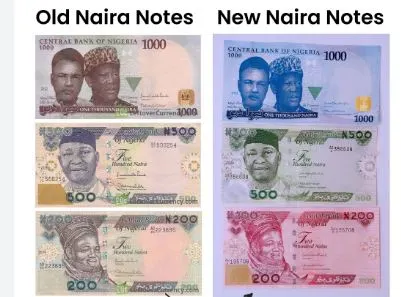
In what can be regarded as a patriotic action to save Nigeria from economic collapse and dangerous path to anarchy, the Supreme Court, on Friday, took side with Nigerians and ordered that the old N200, N500 and N1,000 notes should remain legal tender until December 31, 2023.
In its landmark judgment delivered in the suit filed by the states government against Federal Government over its anti-people naira swap poly, the apex court held that the old naira notes should co-exist with the new notes for a reasonable good time.
The Supreme Court also faulted the directive issued by President Muhammadu Buhari to the Central Bank of Nigeria (CBN) Governor, Mr Godwin Emefiele, to limit access to cash withdrawal and held that the directive was a violation of the right of the owners of such funds to their money.
The apex court thereafter proceeded to set aside the cash limit directive given to banks by the CBN.
The seven-member panel of the Supreme Court also expressed displeasure over Buhari’s refusal to obey its interim order of February 8 on the naira notes deadline.
In the lead judgement delivered by a Justice of the Supreme Court (JSC), Justice Emmanuel Agim, the apex court accused Buhari of disobeying its interim order that halted the full implementation of the new monetary policy and allow the old notes to co-exist with the new ones.
The apex court added the President’s conduct was a disrespect of the 1999 Constitution (as amended) and the nation’s democracy, saying that Buhari’s infamous action represents a drift towards authoritarianism.
Assuming jurisdiction on the matter, the apex court held that the suit by the states was properly filed and dismissed all the objections raised by the Attorney -General of the Federation (AGF) and Minister of Justice, Mr Abubakar Malami (SAN) and the Attorneys-General of Bayelsa and Edo states.
Citing Section 23(2)1 of the 1999 Constitution, the apex court held that the dispute between the Federal Government and states must involve law or facts.
The Supreme Court further held that Buhari in his broadcast admitted that the policy is flawed with a lot of challenges.
The apex court also held the policy has led to some people engaging in trade by barter in this modern age in a bid to survive, adding that the President’s disobedience of the February 8 order is a sign of dictatorship.
The apex court held that President Buhari breached the 1999 Constitution in the ways he issued directives for the re-designing of the Naira by the CBN.
Justice Agim further held that the President failed to consult the National Council of States, Federal Executive Council (FEC) and the National Economic Council (NEC) before directing the CBN to unlawfully introduce new Naira notes.
The JSC also held that the unconstitutional use of powers by Buhari on Naira Re-designing has breached the fundamental rights of the Nigerian citizens in various ways, saying that such use of powers by Buhari is not permitted under democracy and in a society like Nigeria.
The apex court further held that the unlawful use of executive powers by the President, inflicted unprecedented economic hardship on the citizens by denying them ownership of and access to their money.
Sixteen states of the Federation had filed the suit to challenge the propriety of the introduction of the naira redesign policy.
Justice John Okoro who led a seven-man panel of JSCs, had on February 22 fixed Friday for the court to make its decision known on the suit.
The 16 states led by Kaduna, Kogi and Zamfara had urged the apex court to void and set aside the policy on the grounds that it is inflicting hardships on innocent Nigerians.
They accused Buhari of usurping the function of the CBN in the introduction and implementation of the policy and asked that the directive issued by Buhari be voided.
State Governors: Nasir El-Rufai (Kaduna), Yahaya Bello (Kogi) and Bello Matawalle (Zamfara)and were in court to witness the judgement on Friday.
The CBN had extended the deadline for the swap of old N200, N500, and N1,000 from January 31 to February 10 following complaints by many Nigerians but the Supreme Court, after a suit filed by the states, held that the Federal Government, the CBN, commercial banks must not continue with the February 10 deadline pending the determination of a notice in respect of the issue.
But Buhari in a national broadcast, directed the apex bank to release only the old N200 notes into circulation to co-exist with new N200, N500 and N1,000 banknotes for 60 days – April 10, 2023. He also directed that the old N500 and N1,000 banknotes had ceased to be legal tender in Nigeria.
There has been a flurry of reactions and stark criticisms against the President’s directive including from governors of his party, the All Progressives Congress (APC).
Governors Nasir El-Rufai (Kaduna), Abubakar Badaru (Jigawa), Rotimi Akeredolu (Ondo), Umar Ganduje (Kano); Speaker of the House of Representatives, Hon Femi Gbajabiamila; Minister of State for Labour and Employment, Festus Keyamo (SAN); and many chieftains of the ruling APC have openly faulted the President’s directive, arguing that the president’s action was subjudice as the matter is before the apex court.
Senior lawyers: Femi Falana (SAN) and Mike Ozekhome (SAN) also faulted Buhari’s move, saying that he could not overrule the final court in the land.
Also, three State Governors- Kaduna, Zamfara and Kogi have filed another suit against Malami and the CBN Governor, Godwin Emefiele over contempt of court and their alleged failure to comply with the Supreme Court order on the old naira notes.