




The question now is, are women ready to take advantage of this moment?
After all, Ronald Reagan also said and I quote: “If you put it on the table as a bargaining chip, it becomes a bargaining chip.”
Perhaps its high time for Nigerian women to use their numbers and call in the progressive rhetoric on inclusion for a greater stake in our democratic journey.
Maybe then women will indeed be higher up on the stakes for the 2023 general elections.
Every day, we read, watch and hear about what the different political parties are doing to engage women in their campaigns and election strategies.
To be honest, this is not new. Women have always played an active role in politics in Nigeria but since 1999, the role of women in political parties and campaign machinery has been limited to women leaders, treasurers, and the occasional deputy roles.
Women were seriously courted by the progressives in the prelude to the 2015 elections. Then presidential hopeful, Muhammadu Buhari even met with women in Lagos.
Unfortunately, that did not result in greater opportunities and positions for women when the party eventually won the election and it hasn’t been in the last seven years.
The question is: What will be different this time? Maybe women need to hold the aces and bargaining chips to how their contributions to the campaign will be valued.
However, this is changing slowly but steadily, at least as far as preparations for the 2023 general elections go. Parties are now rolling out campaign strategies led by women, even in the major political parties known for their patriarchal stand.
Unlike in the past when women were mostly bargaining chips and even now, some women still are. Lizz Winstead once said: “It just seems OK these days to throw women under the bus.
Like we are a bargaining chip.” But what if we are on the bus and not under it? Well, in this case, it might not be a bad idea to get on the campaign trail and use that to our advantage as women.
In politics, a “bargaining chip” refers to something that is used as leverage in a negotiation, an attempt to pass legislation, or an effort to get concessions from another party.
From the Peoples Democratic Party (PDP) to the All Progressives Congress (APC) and Labour Party (LP), political parties are justling to outdo one another as the most gender-inclusive and friendly.
Campaign managers are coming up with different acronyms to sway the teeming crowd of now more aware women electorate. It’s no longer business as usual and women want more than the occasional women leader and mobilisation roles for rallies and marches.
The APC opened the floor on 3 October in Lagos with an all-women march in support of the party’s flagbearer. Led by the party’s Women Leader, Jumoke Okoya-Thomas, the Lagos APC organised a rally tagged: “Lagos Women Support Walk for Tinubu/Shettima, Sanwo-Olu, Hamzat”.
The rally featured many Nollywood celebrities. The party even has a council, known as the ‘Tinubu/Shettima Women Presidential Campaign Team’ led by The First Lady, Aisha Buhari as grand patron, including Abike Dabiri and Rinsola Abiola, daughter of the late Chief MKO Abiola.
It is becoming more evident that the stakes are higher for the 2023 General Elections and women are no longer relegated to the singing, dancing and “Aso Ebi” roles.
They are now leading strategy, and campaigns and serving as spokespersons. This is a welcome development, but women still have a long way to go. None of the political parties has female vice-presidential candidates running in 2023.
Not to be left behind, the wife of the PDP’s presidential flagbearer Mrs Amina Titi Atiku Abubakar launched her campaign organisation to support her husband’s presidential ambition with the catchy phrase S.H.E.
The campaign organisation named “She Campaign Women & Youth Support Group” is to bring women, youth, children and those living with disabilities closer to the PDP presidential campaign. The acronym stands for Security, Health and Education.
Similarly, the LP went a step further by appointing two women, Nana Kazaure and Ndi Kato, as two of its six official spokespersons of the Obi/Datti campaign.
Tagged OBIdients, many of the campaigners for the party are women using their platforms online and offline to advance the party’s popularity.
In August, the party’s presidential flagbearer announced the appointment of a civil society activist, Dudu Manuga, as the party’s national women leader. An education and humanitarian expert, Manuga is from Gombe State.
It is becoming more evident that the stakes are higher for the 2023 General Elections and women are no longer relegated to the singing, dancing and “Aso Ebi” roles.
They are now leading strategy, and campaigns and serving as spokespersons. This is a welcome development, but women still have a long way to go. None of the political parties has female vice-presidential candidates running in 2023.
We may not know all the variables and permutations going on in the minds of all the political actors, but one thing is clear: In these elections, the stakes are getting higher by the day and women appear to be high on the list.
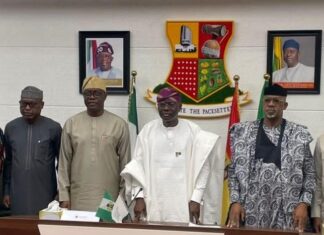
This week, the governor of Rivers State spoke extensively at a gathering in Lagos State about the importance of women in governance and eulogised his work in Rivers State, as well as that of Lagos State on women inclusion, stating that: “women should not be treated as second class citizens, because they are important for the transformative aspiration of any society.”
Furthermore, he said, “Nigeria is more likely to experience stronger and more inclusive economic growth and reduced poverty when women are empowered with skills and resources to participate fully in the economy as business leaders and entrepreneurs.
We cannot have truly representative democracy without according women reasonable space and opportunities in the political power structure and decision-making processes of the country as a matter of right.”
This might sound like rhetoric but it’s a pointer to the increasing importance of women in this election, so all politicians are saying the right things and using the right anecdotes to woo the electorate as forward-looking and inclusive.
I believe this is a watershed moment in the history of Nigerian politics and it is a ripe time for women’s rights organisations and the larger civil society to take advantage of this repetition by political parties.
We need to task the political parties and their flag bearers to put their money where their mouths are and move from rhetoric to action.
Political demagogues do not believe in women’s inherent equality – mostly, they use women to gain the veneer of progressiveness, which is rather damaging to democratic values.
As advocates for women’s inclusion and gender equality, we may take these ‘steps’ as progress but it is false progress, a variation to a Trojan horse, a poison pill, if it does not transcend to meaningful and participatory outcomes for women in democracy, leadership and governance.
However, this is not only a Nigerian problem, it appears politicians have found the right words to say to sway emotions during an election year.
As former President Wade of Senegal tried to consolidate power for his third term, one of the first things he did was increase women’s political representation through affirmative action.
He said similar words about the importance of women; unfortunately, less than 10 years after, those ‘gains’ have been reversed as if they never were.
Political demagogues do not believe in women’s inherent equality – mostly, they use women to gain the veneer of progressiveness, which is rather damaging to democratic values.
As advocates for women’s inclusion and gender equality, we may take these ‘steps’ as progress but it is false progress, a variation to a Trojan horse, a poison pill, if it does not transcend to meaningful and participatory outcomes for women in democracy, leadership and governance.
Unfortunately, while we are celebrating these wins and being inundated with progressive messages for women’s inclusion, Justice Abdulaziz Anka of the Federal High Court in Yola, Adamawa State, recently ruled to nullify the candidacy of Senator Aishatu Ahmed, as the governorship candidate of the APC in the state.
The court also denied a plea for a fresh primary, which implies that the APC would have no gubernatorial candidate in the 2023 election. Another woman has been thrown under the bus.
In Ebonyi State, embattled Princess Ann Agom-Eze has been in a face-off with the party and the state governor over the APC ticket for the Ebonyi South Senatorial seat.
Even more unfortunate, the APC is yet to make a statement about the hounding and disqualification of the only woman to win gubernatorial primaries and one of few to win senatorial primaries.
The question now is, are women ready to take advantage of this moment? After all, Ronald Reagan also said and I quote: “If you put it on the table as a bargaining chip, it becomes a bargaining chip.”
Perhaps its high time for Nigerian women to use their numbers and call in the progressive rhetoric on inclusion for a greater stake in our democratic journey. Maybe then women will indeed be higher up on the stakes for the 2023 general elections.
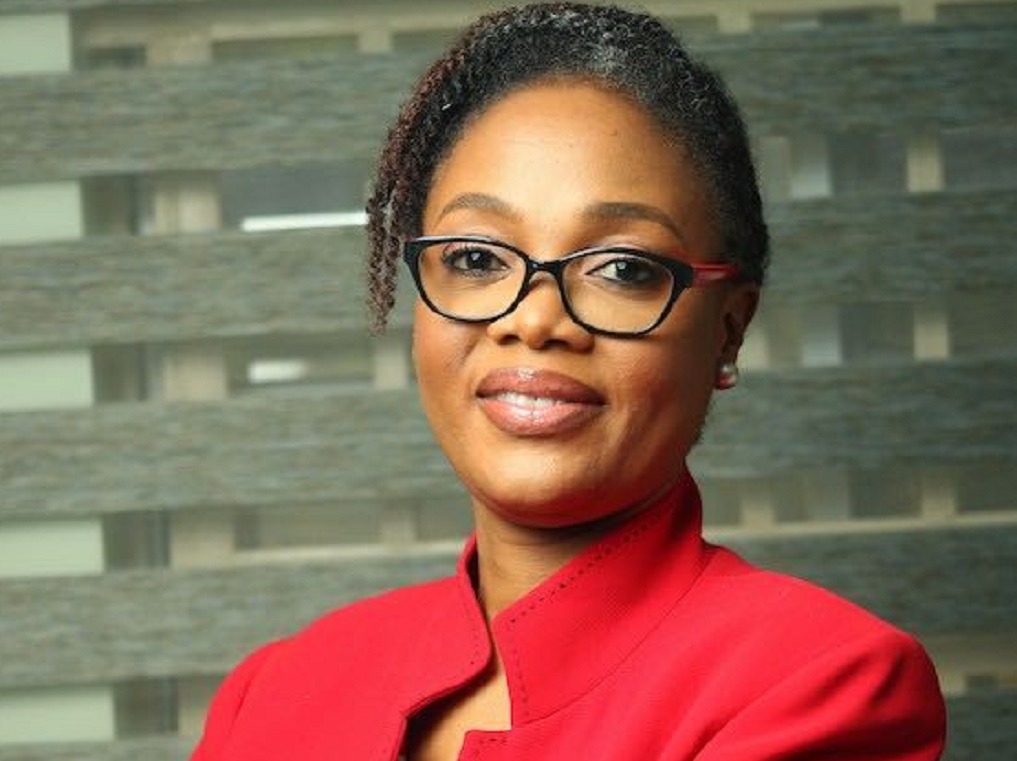
Olufunke Baruwa is a Nigerian feminist, gender and development practitioner. She is currently the Program Officer for Gender, Racial and Ethnic Justice at the Ford Foundation Office for West Africa where she leads work on ending violence against women and girls.