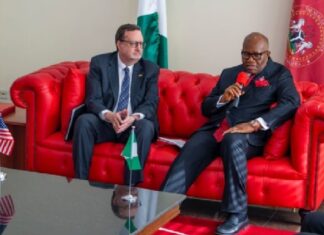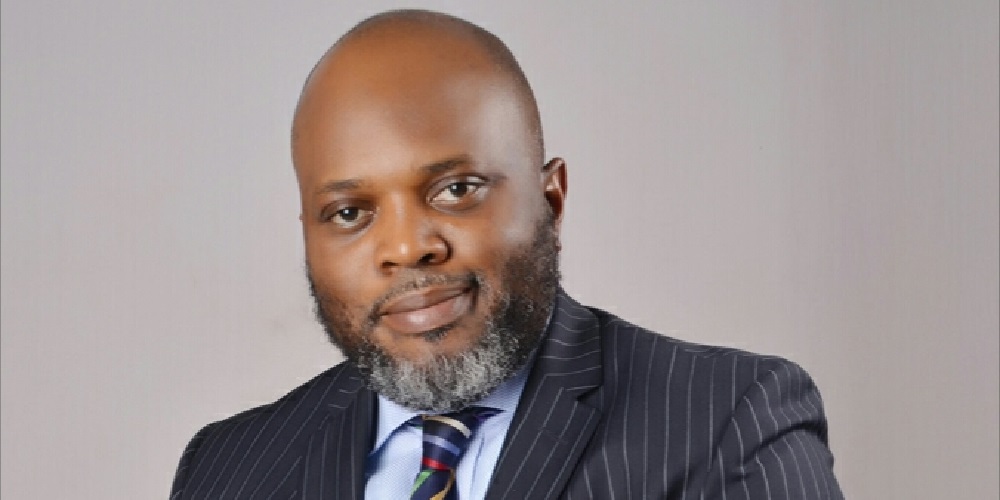





The Special Adviser to the President on Economic Matters, Dr Tope Fasua, has disclosed that President Bola Tinubu’s administration is working on policies that will strengthen the Naira, saying that the President will soon shock currency speculators as Naira may appreciate to N500 or N600 against a dollar.
Fasua disclosed this on Tuesday during the “Cowries to Cash” lecture and lunch in Abuja
Speaking on the gradual rise in the value of the naira in the past few days, Fasua said the trend is expected to continue as a result of policies being implemented by the Federal Government.
On the argument that the fall in the value of the currency of a country was a sign of conquest, Fasua said: “When you want to destroy a country, destroy its currency first.”
He also cautioned Nigerians hoarding foreign currencies with the hope that the local currency will continue to fall, warning that the policies of the government would shock them.
Fasua, who represented Vice President Kashim Shettima at the event, said: “For those who are speculating and praying and wishing that the currency would become nonsense, I believe that policies being rolled out by the Central Bank of Nigeria and the government that I serve, led by the President, will shock some of them.
“You need to listen to the agenda from the man himself (Tinubu) and you will see that the level at which he is thinking is far ahead of most of us.
“You know, he has some very great ideas coming up. Some of them are what you’ve seen reversing the fall in the value of the naira, but he has also challenged us to review forward many of the targets, for example, the idea that Nigeria’s economy will get to a trillion dollars. He wants to achieve it by 2026.
“Some people thought the naira will continue to lose value. Of course, we can already see what’s going on and who knows, maybe the naira will strengthen even further to maybe something N500 or N600. I’m beginning to see some of those.”
Fasua further said necessary arrangement is being put in place to reorganise the banking sector to make the naira more stable and stronger.
He said, “If you want to position your exports properly, you have to be strategic, even in terms of the value of your currency. So you’re going to see all of these, including efforts from the fiscal side.
“We have patriots running the economy right now. And naysayers have to be very, very afraid,” .
In his keynote address at the event, the Central Bank of Nigeria (CBN) Governor, Dr Olayemi Cardoso, said the country was going through economic challenges occasioned by a number of macroeconomic issues linked to some of the lingering impacts of the COVID-19 pandemic and the ongoing Russia-Ukraine war.
Cardoso, who was represented by the Director of Banking Supervision, Mr. Mustapha Haruna, said the book (Cowries to Cashless) would eloquently capture the evolutionary journey in the history of the CBN, particularly with regards to the phenomenal transformation of the Nigerian payment system in the last two or three decades.
The CBN Governor added that the transformation had been deepened by the implementation of the cashless policy.
He said, “One of our strategic priorities in this effort is to foster financial inclusion and I’m very sure you will also relate to the progress we have made, based on the current numbers.
“We have financial inclusion in the neighbourhood of about 64 per cent. Over 64 per cent of Nigerians have access to formal financial services.
‘’Our vision is to push the boundaries to over 95 per cent and we are well on course, in achieving that objective.”
Cardoso further assured that the CBN would continue to collaborate with the key stakeholders, particularly the fiscal authorities, to ensure that it addressed a number of the essential issues and challenges currently facing the country.
Speaking on the essence of the book, the author and the Executive Director of Asher Global Treasures, Princess Iphie, emphasised the need to preserve the evolution of money and its history in Nigeria.
Iphie said: “If you don’t know what yesterday was and you don’t know what is today, definitely you will not know what tomorrow will be.
‘’So we started from Cowries to Manillas and then other ones before we started with the exchange of goods and then this is where we are right now — the technological age and loads of innovation.”