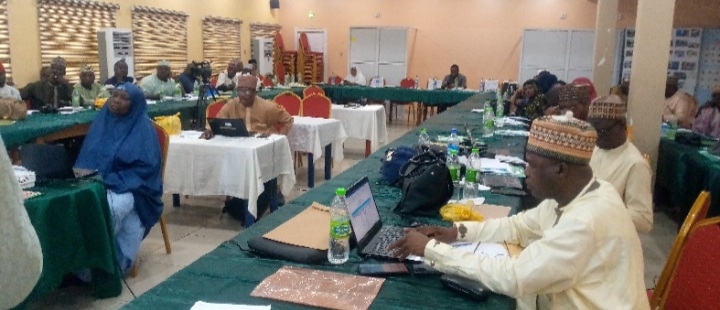





The United Nations Children Fund (UNICEF), on Tuesday, commenced a three- day media dialogue for journalists in Sokoto and Zamfara states on why girl-child education should not only be prioritized but also sustained even after donor agencies winds up their programme.
Speaking on the objectives, methodology, and the expected outcome of the media dialogue, Mr Samuel Kaalu, Communication Specialist, UNICEF Field Office, Kano maintained that the global body is convinced that the media will play great role in sensitizing the masses to embrace girls education.
He said, “The media is a powerful institution that can be used to sensitize, advocate, and elicit support of the masses.
“It will also help to appraise the goal of the girls education project (GEP3) funded by Foreign, Commonwealth and Development Office (FCDO) of the United Kingdom and implemented by UNICEF in collaboration with respective state governments”.
Kaalu also said that the expected outcome of the media dialogue will include but not limited to continued sensitization, getting the media to commit to sustainace and gain in-depth information on the reality of girl-child education as well as projecting donor visibility on the project.
UNICEF Sokoto State Chief of Field Office, Maryam Darwesh Said, observed that the Girl Education Project (GEP) has recorded successes since it’s inception in 2012.
According to her, about 418,614 (44%) were enrolled in Sokoto while 545,711 (62%) in Zamfara through the GEP3 supported schools.
Maryam also disclosed that the GEP has also built the capacity of 5,943 teachers with 486 being females in Sokoto and 5650 of which 295 are females Zamfara State.
Declaring media dialogue open, Sokoto State Commissioner for Basic and Secondary education, Hon Muhammed Bello Guiwa, said the state is committed to quality education for all.
He added that the development prompted Sokoto State Government to declare emergency on education and devote highest percentage of its yearly budget since 2015 to the education sector.