




*As 46million Nigerians still lack access to toilets
*Seek reflection of toilets in national, states budgets
*136,712 people currently living in ODF certified communities – Borno RUWASSA
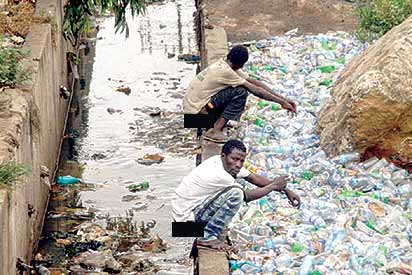
As Nigeria joins the rest of the world to mark the World Toilet Day (WTD), the United Nations Children’s Fund, UNICEF is calling for prompt action and collaborative efforts to end the menace of open defecation in Nigeria.
This is just as about 46million Nigerians still lack access to toilets and protection against diseases and possible deaths.
Speaking during a one-day media dialogue to commemorate the World Toilet Day in Maiduguri, Borno State, the Officer -in- Charge, UNICEF Chief of Maiduguri Feild Office, Dr Clement Adams, said it is only through such concerted efforts that Nigeria would be able to achieve Open Defecation Free (ODF) status by 2025.
Adams said, “At a time when the Federal Government has made a call to make the country open defecation free through the nationwide Clean Nigeria Campaign, it’s important that all states adopt this in a mission mode to become open defecation free by 2025.
“Practical steps towards ending open defecation by constructing more toilets and water sources especially among the most vulnerable population whether in camps or host communities needs to be pursued.
“Schools, markets and other public places must not be left out even as we promote behavioural change among the people”.
The UNICEF field officer, who said that the theme of the 2021 WTD is apt, further disclosed that with about 16 per cent of the population in Borno and 32 per cent in Yobe State still practicing open defecation, there was the need to review existing mechanisms with a view to improving access to toilets inorder to reduce disease outbreaks.
He also called for the reflection of toilets in the National and States budget, saying that, “National and States budgets must reflect the importance of toilets and water sources to the health of children and workforce. We must prioritise investment in physical and human resources and scale up expansion targeting expansion of toilet and water services”, he added.
Adams added that UNICEF has been supporting state governments in North-East since 2018 with the contribution and rehabilitation of 4,752 and 2,976 toilets respectively.
He said, ” Since 2018, UNICEF has supported state governments in the North- East with the construction and rehabilitation of 4,752 and 2,976 toilets respectively across IDP camps and communities.
“About 200 sites have been supported with hand pump boreholes while 126,690 non-food items have been distributed to displaced and vulnerable families.
“UNICEF has built capacities of state departments and LGAs to deliver safe and sustainable WASH services to communities and IDPs. UNICEF has also supported Adamawa, Borno and Yobe states to undertake rapid response to cholera outbreaks”.
Meanwhile, Borno State government has said that about 136,712 people have abandoned open defecation and are currently living in communities certified Open Defecation free in Biu, Shani and Bayo LGAs.
Reeling out the feat recorded during his presentation at the media dialogue, Borno State RUWASSA General Manager, Dr. Mohammed Aliyu said the state government through its RUWASSA programme implemented Communty Led Total Sanitation, CLTS, in Konduga, Bama, Mafa, BIU, Bayo, and Shani L.G.As.
According to him, with the implementation of the programme , about 66,570 people gained access to safe sanitation facilities through construction/rehabilitation and improvement of household latrines under the Community-Led Total Sanitation.
He said, “18,816 household latrines were constructed and put to use under the Community-Led Total Sanitation.
“Promotion of improved technology options through sanitation marketing led to construction of 13000 “Safe Toilet” (SATO PAN).
He added that Borno State Government is committed to support and ensure that all communities in the state are ODF.